By Tom Jarvis
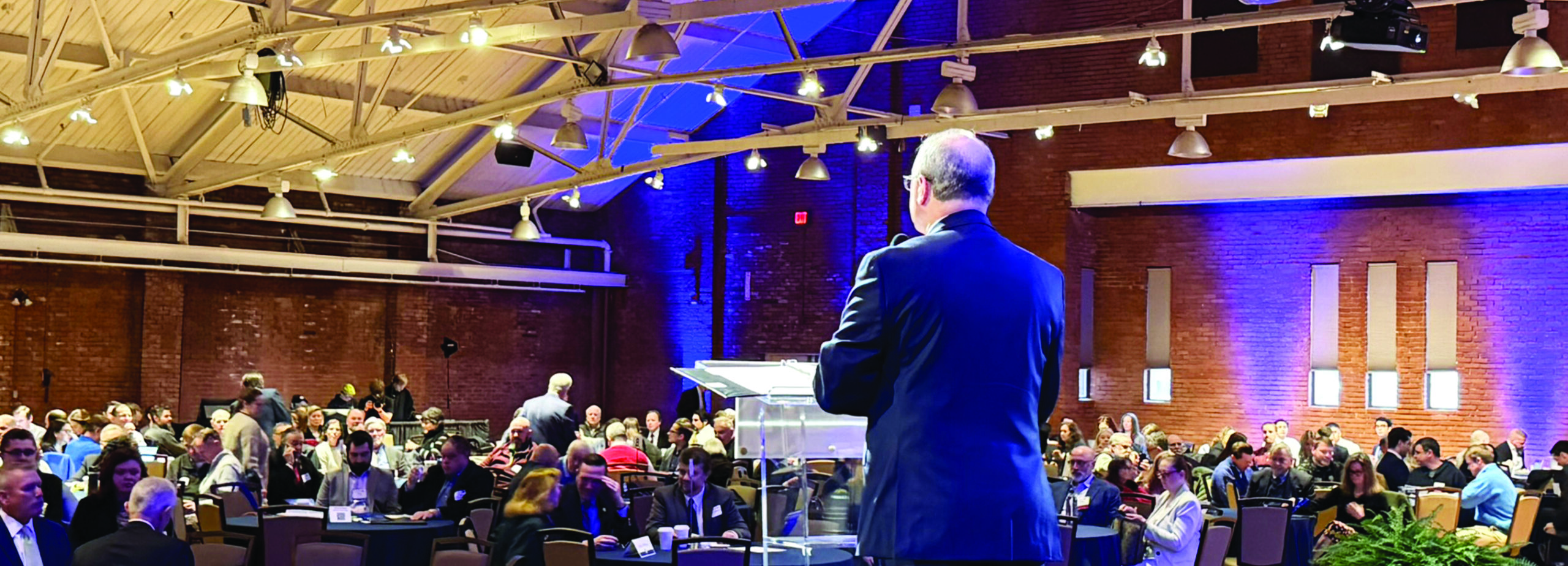
The New Hampshire Bar Association’s 2026 Midyear Meeting (MYM), held Friday, February 20, at the DoubleTree by Hilton in Manchester, drew more than 400 attorneys, judges, and legal professionals from across the state.
The meeting’s theme, “250 Years of Independence: Honoring Our Past, Engaging Our Future,” reflected the nation’s upcoming semiquincentennial and invited attendees to consider how constitutional principles continue to shape government and the rule of law. The program featured a full day of CLE sessions, guest speakers, awards, and networking opportunities.
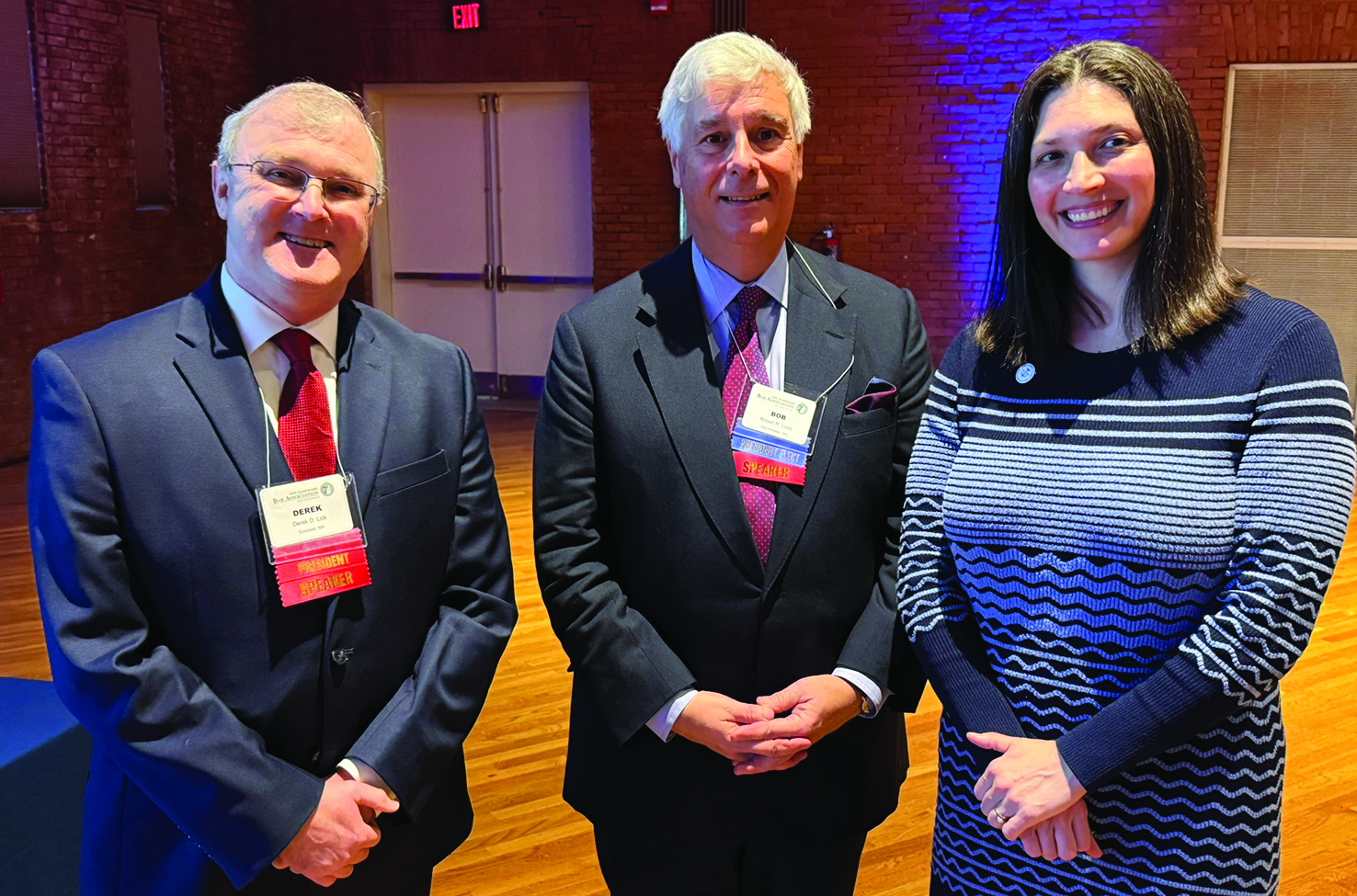
“It was fabulous to see so many attorneys and judges at the sold-out Midyear Meeting as we carried on our unique tradition of fellowship, collegiality, and shared purpose,” says NHBA President Derek Lick. “It is precisely this type of engagement that makes our Bar special.”
Four of the eight CLE sessions examined the history, significance, and modern-day application of the New Hampshire Constitution, while the remaining four addressed emerging issues such as artificial intelligence and attorney engagement.
“This year’s Midyear Meeting was a tremendous success and a reflection of the dedication and collaboration that define the New Hampshire Bar Association,” says NHBA Executive Director Sarah Blodgett. “I want to thank the speakers, panelists, organizers, and staff whose efforts made the program possible. Our largest annual gathering, the Midyear Meeting brings the Bar together to connect, share ideas, recognize achievements, and advance the work we do for our members and the public.”
The day began with the 2026 Gender Equality Breakfast, a longstanding MYM tradition hosted by the NHBA’s Gender Equality Committee (GEC), which welcomed more than 70 attendees.
GEC Chair Meredith Lasna opened the breakfast by highlighting the progress women have made in the legal profession while emphasizing that barriers to gender equality remain. She outlined several ongoing committee initiatives, including efforts to support LGBTQ attorneys, reimagining a negotiations workshop, and addressing lactation policies in court settings.
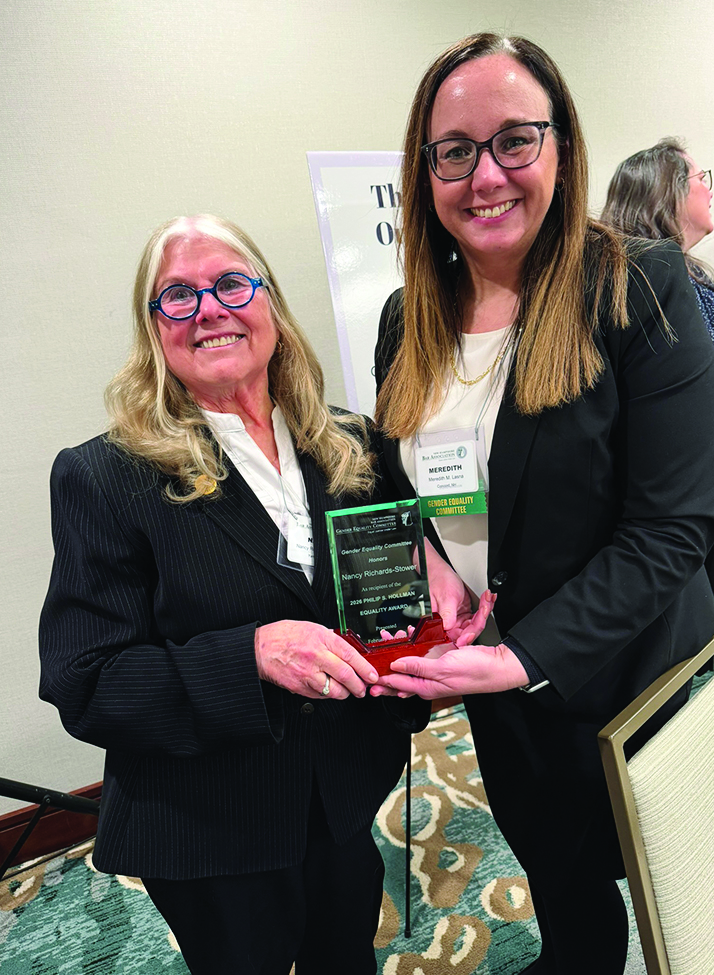
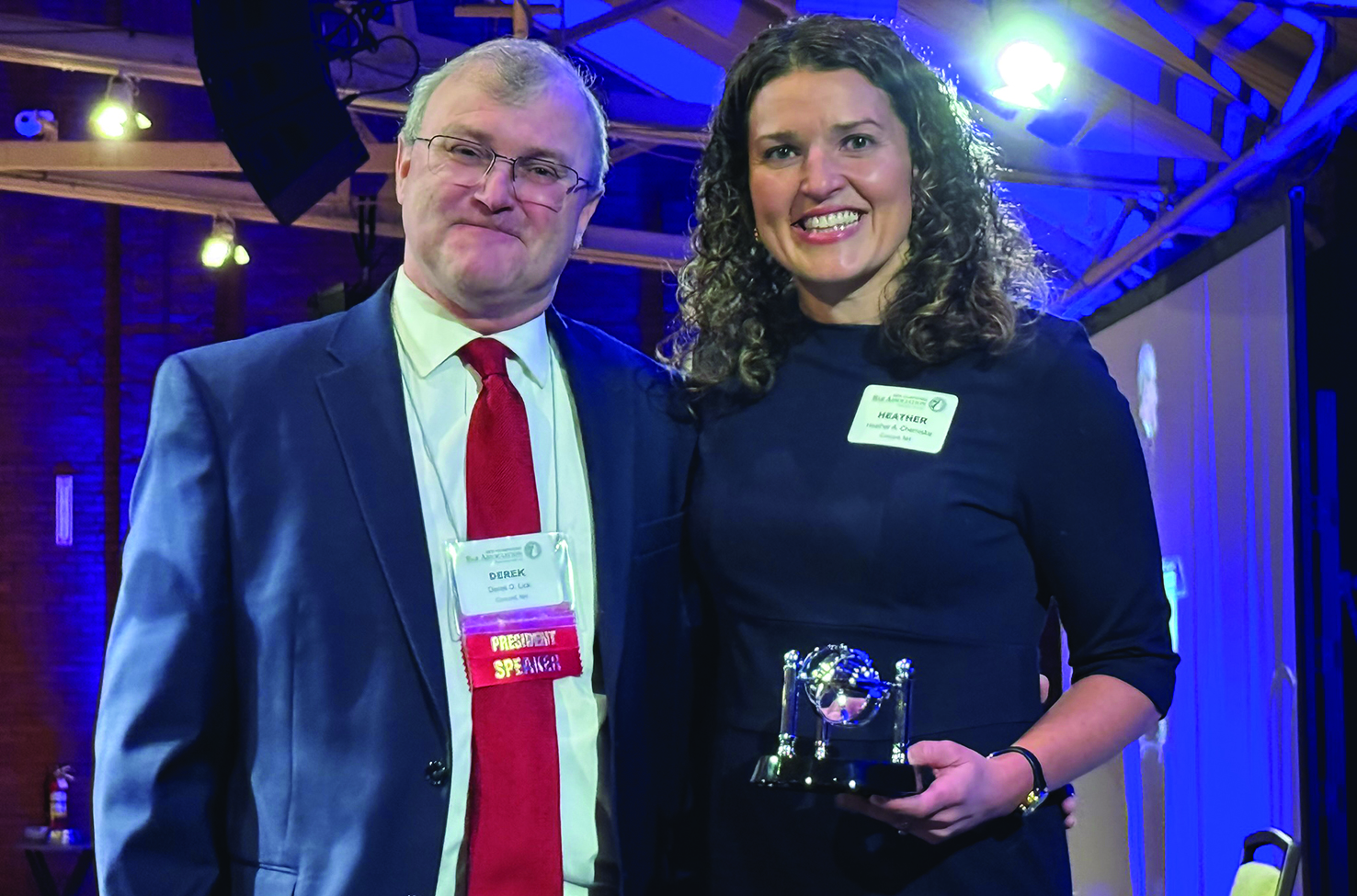
Afterward, GEC member Heather Burns presented the 2026 Philip S. Hollman Award for Gender Equality to Nancy Richards-Stower.
“Nancy has spent her career fighting to eradicate gender and other forms of discrimination in the workplace – one lawsuit at a time,” Burns said.
A longtime plaintiff’s employment attorney whose five-decade career has focused on combating workplace discrimination and advancing equal pay, Richards-Stower reflected on early mentors who encouraged her to pursue litigation in service of racial and gender equality. She cited mentor Robert Fitzpatrick as instrumental, explaining that “fearing litigation defeat had to take a back seat to the mission of advancing causes of racial and gender equality.”
Richards-Stower also urged attorneys to build professional communities, challenge structural barriers within the profession, and remain steadfast in protecting civil rights under the rule of law.
Looking ahead to the future of women in the profession and the growing role of artificial intelligence, she noted, “As so many women choose solo or small firms to meld their family lives with their professional lives, this AI business creates a giant hurdle for us, but it also creates opportunity. The yin and the yang for our profession may, after all, be gender neutral.”
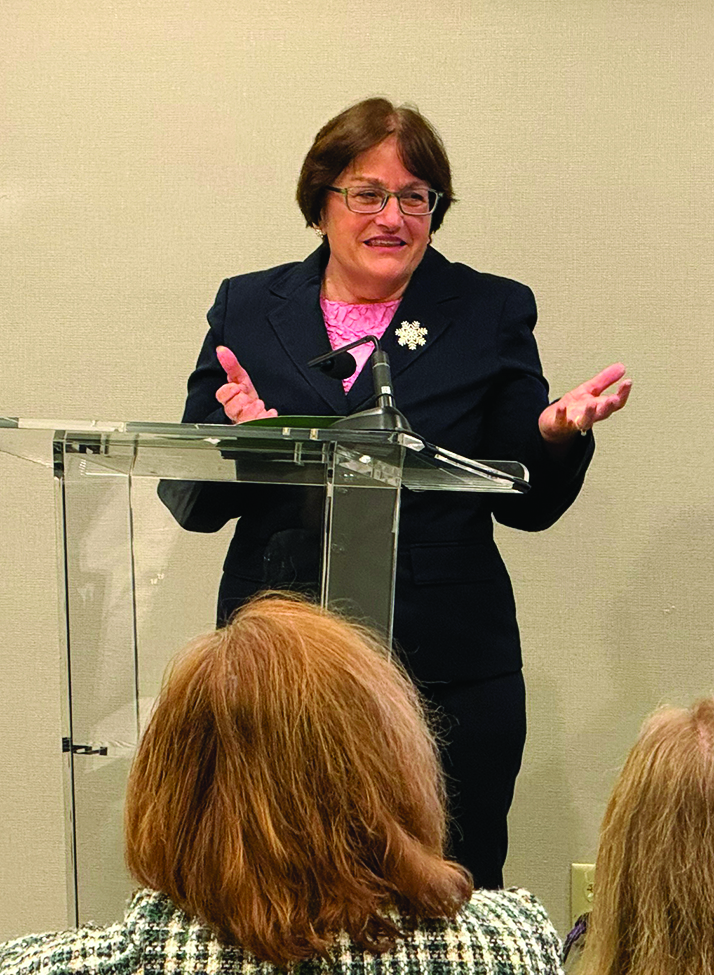
The breakfast concluded with remarks from keynote speaker and former congresswoman Annie Kuster, who represented New Hampshire’s Second District from 2013 to 2025.
Kuster, an attorney and public policy advocate, reflected on her decades-long career in law and public service, sharing personal experiences with pay inequity, workplace bias, and harassment, as well as the challenges of balancing litigation practice with family responsibilities. She recalled being paid significantly less than a male colleague performing the same work and described moments early in her career when she was mistaken for support staff rather than an attorney.
While noting that opportunities for women have expanded significantly during her lifetime – including her service in the first all-female congressional delegation in the nation – she emphasized that persistent bias and inequity remain. She urged attorneys to support one another, pursue leadership roles, and remain engaged in protecting constitutional principles and the rule of law, underscoring the importance of representation in decision-making spaces.
“If you’re not at the table,” she said, “you might be on the menu.”
Following the breakfast, Lick offered an overview of the day’s programming and invited New Hampshire Supreme Court (NHSC) Chief Justice Gordon MacDonald to address attendees. Chief Justice MacDonald thanked Bar leadership and staff for their collaboration with the Court, noting the strength of the relationship between the judiciary and the NHBA.
Reflecting on the meeting’s theme and the nation’s approaching 250th anniversary, he emphasized the importance of judicial independence as a cornerstone of both the federal and state constitutions. Citing historical grievances outlined in the Declaration of Independence and recent remarks by US Supreme Court Chief Justice John Roberts, he warned of rising threats to the judiciary, including violence, intimidation, disinformation, and refusal to comply with lawful court orders. He encouraged attorneys to view themselves as stewards of the judicial system and to remain committed to upholding the rule of law and public confidence in the courts.
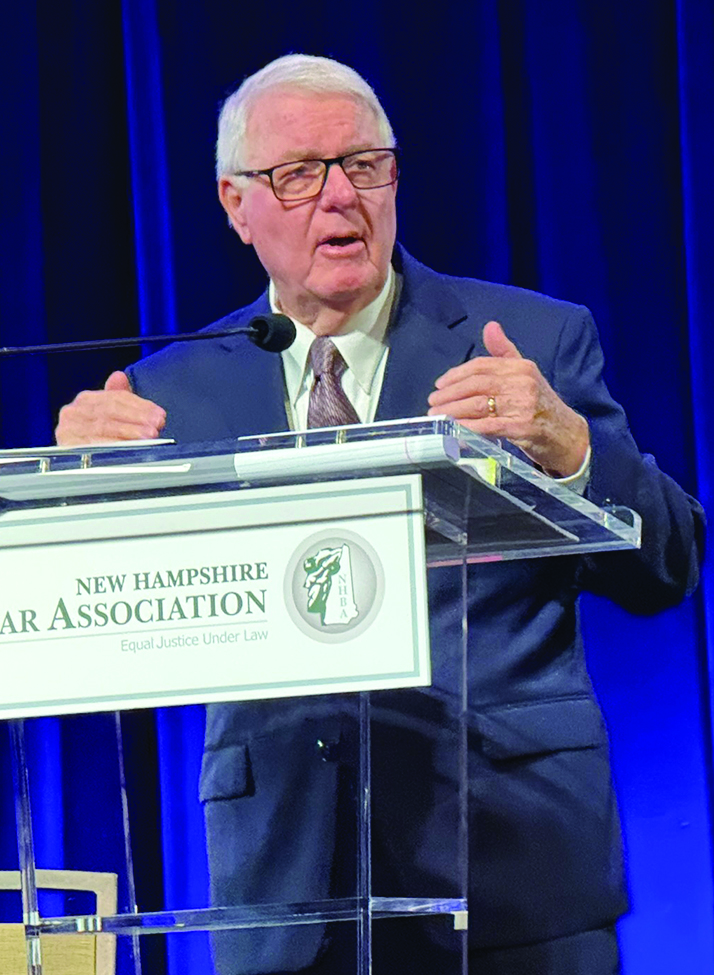
The first CLE of the event, “Self-Evident Truths: Principles from the Revolutionary Era Embodied in the State Constitutions,” featured retired Rutgers Law School Professor Robert Williams, a scholar of state constitutional law and former director of the Center for State Constitutional Studies. Williams examined the founding decade from 1776 to 1787, arguing that the most significant period of American constitution making occurred not in 1787 alone, but in the earlier wave of state constitutional drafting that began during the Revolution.
Williams emphasized New Hampshire’s historical distinction as the first state to adopt a constitution in January 1776, months before the Declaration of Independence. He contrasted early “people’s government” models with later Massachusetts and New Hampshire constitutions that incorporated separation of powers and an independent judiciary. He encouraged attorneys to revisit the New Hampshire Constitution as a living document, noting that state constitutions are more frequently amended and can provide protections beyond those recognized under federal law.
Building on Williams’ exploration of the founding era, the next CLE, “The Important Work of Building and Structuring the New Hampshire Constitution,” focused on the practical work of interpreting the Granite State’s constitutional text.
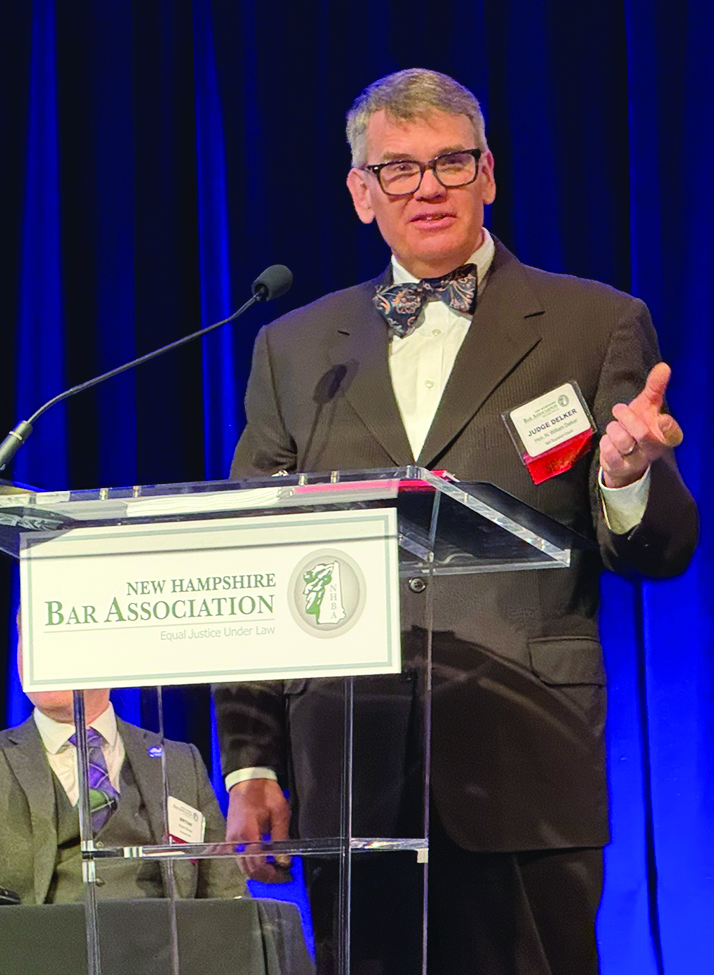
Superior Court Judge N. William Delker introduced the New Hampshire Constitution Project, an initiative designed to create a centralized, publicly accessible collection of historical materials related to the drafting and amendment of the Constitution. He emphasized that meaningful state constitutional advocacy requires historically grounded, fully developed arguments rather than mere citation.
University of New Hampshire Franklin Pierce School of Law 2L Bryan Rome then demonstrated the project’s developing online platform, which compares prior and current constitutional language and compiles legislative and archival materials to help lawyers and judges better understand how provisions have evolved over time.
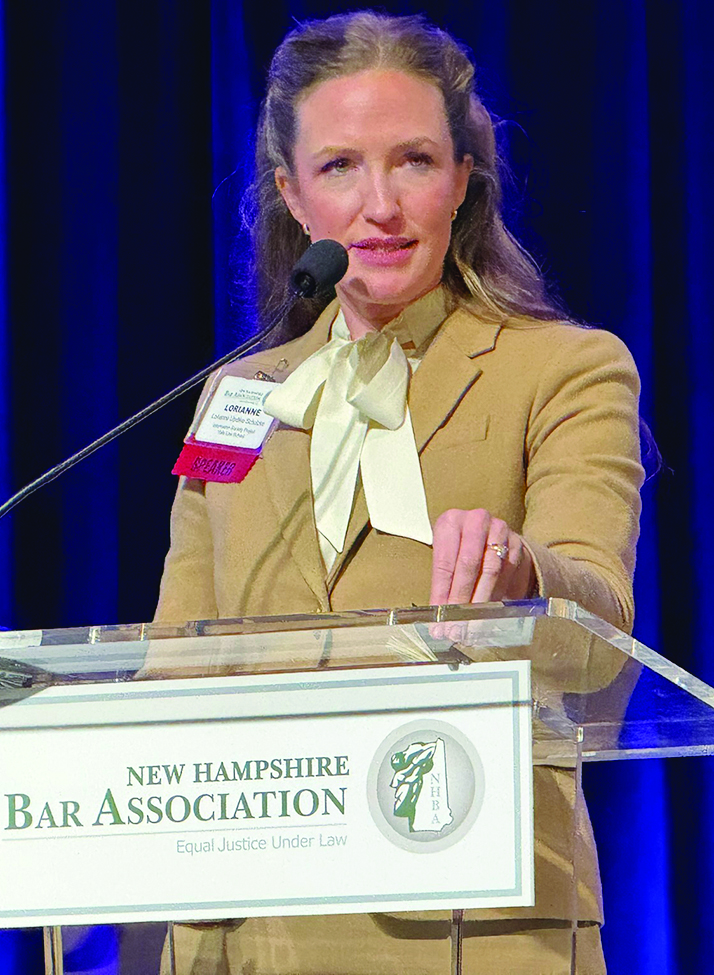
Following Judge Delker’s presentation, Yale Law School Visiting Associate Professor Lorianne Updike Schulzke explored the historical development and enduring significance of the state’s founding document in her presentation, “The Vitality of the New Hampshire Constitution.”
Drawing on primary source research, Updike Schulzke traced the drafting of New Hampshire’s 1776 temporary constitution and the contentious efforts that ultimately produced the 1784 Constitution.
She examined the political disputes – particularly over representation and regional interests – that shaped the process and noted the Constitution’s durability reflected collaboration across competing factions. She encouraged attendees to consider how that history informs modern constitutional interpretation and civic engagement.
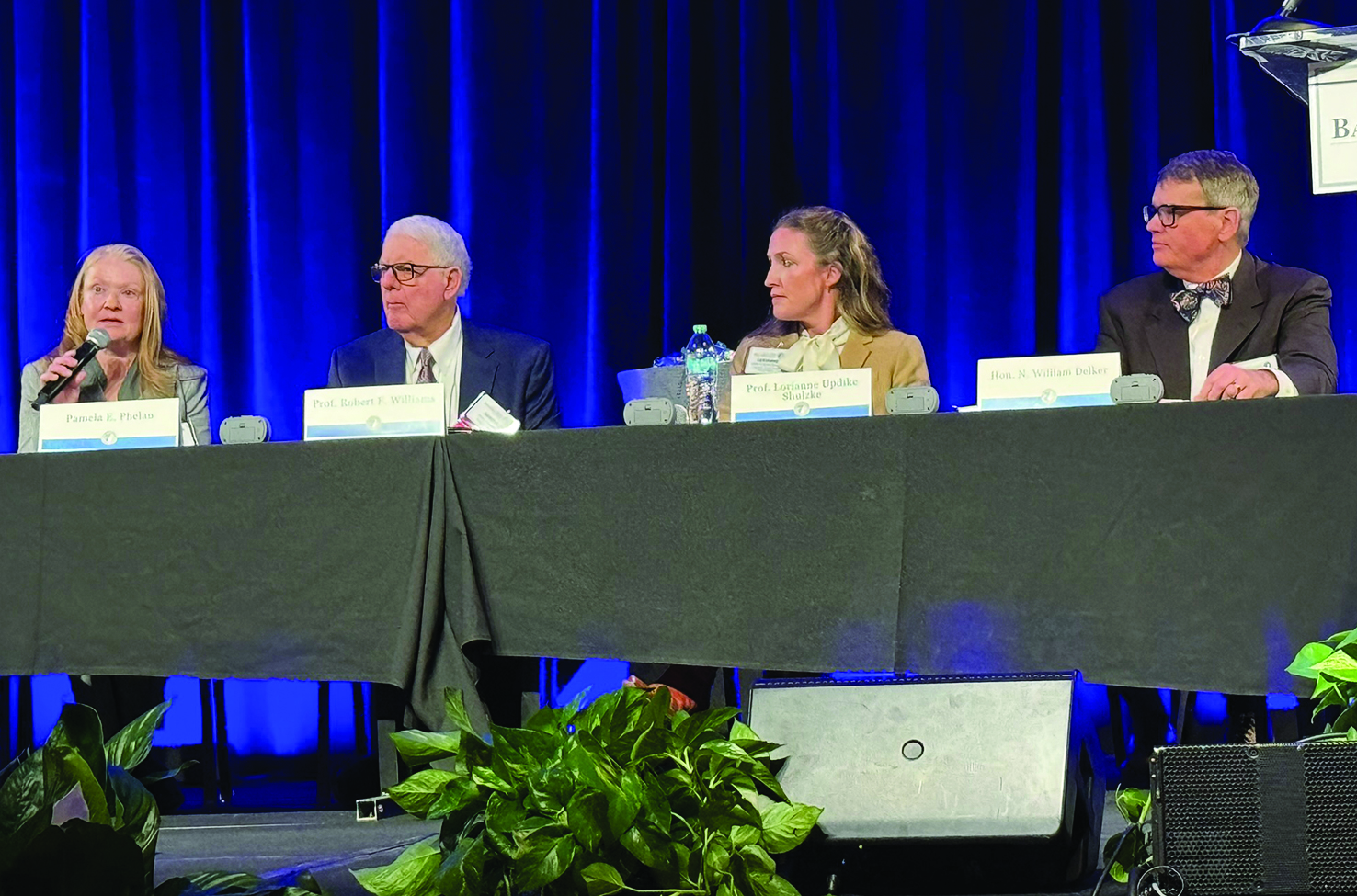
Continuing the focus on state constitutional interpretation, the next CLE featured a panel discussion titled “Why History Matters to the 21st Century Lawyer.” Moderated by Judge Delker, the panel brought together professors Williams and Updike Schulzke and New Hampshire Public Defender Pamela Phelan to examine the practical implications of constitutional history for modern advocacy.
Panelists discussed the NHSC’s practice of analyzing the state Constitution before federal claims and examined how lawyers can develop historically grounded state constitutional arguments by consulting founding-era materials and distinguishing state provisions from federal counterparts. The presenters emphasized that historical context is not merely academic, but can play a central role in shaping effective advocacy before New Hampshire courts.
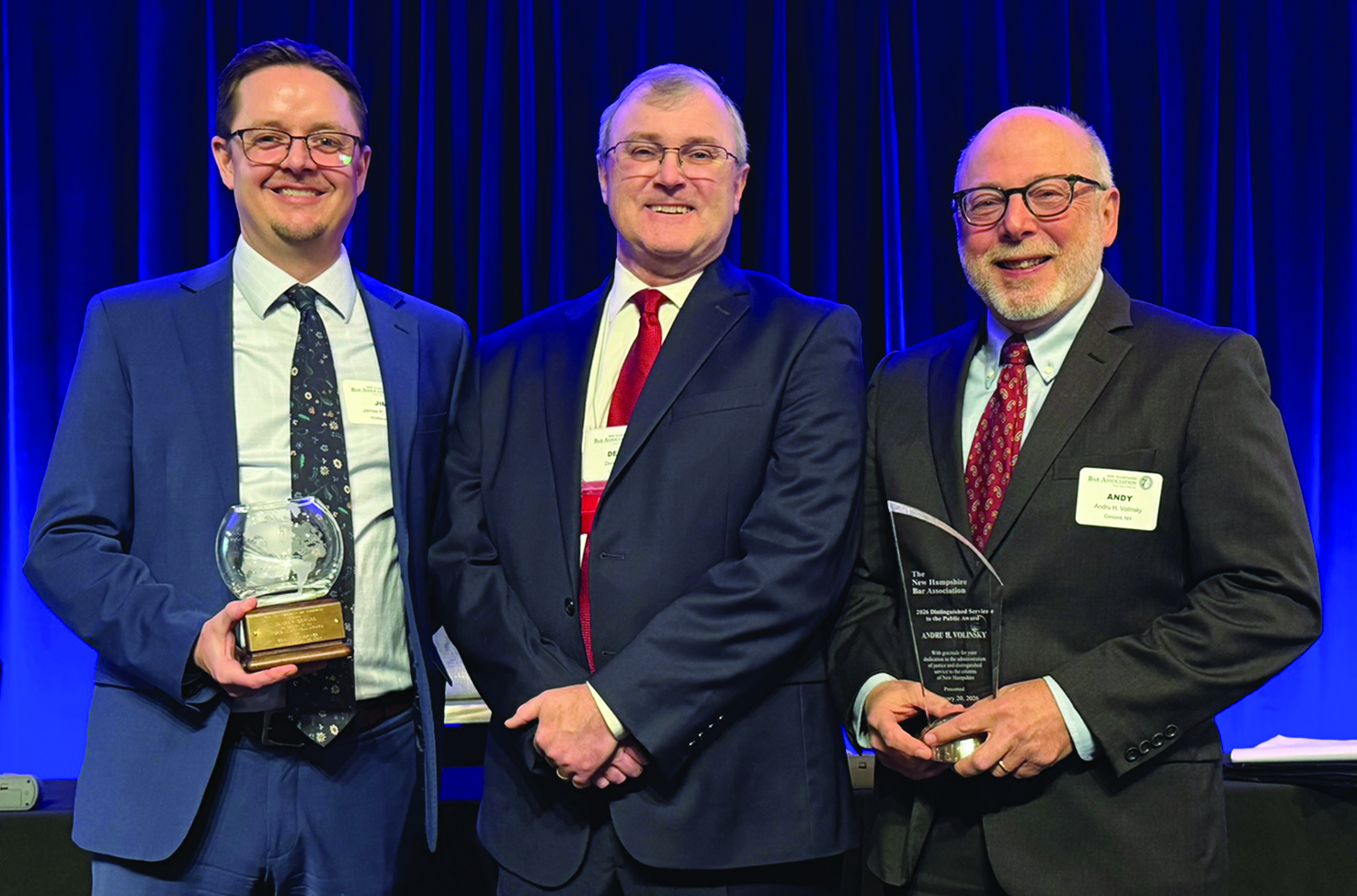
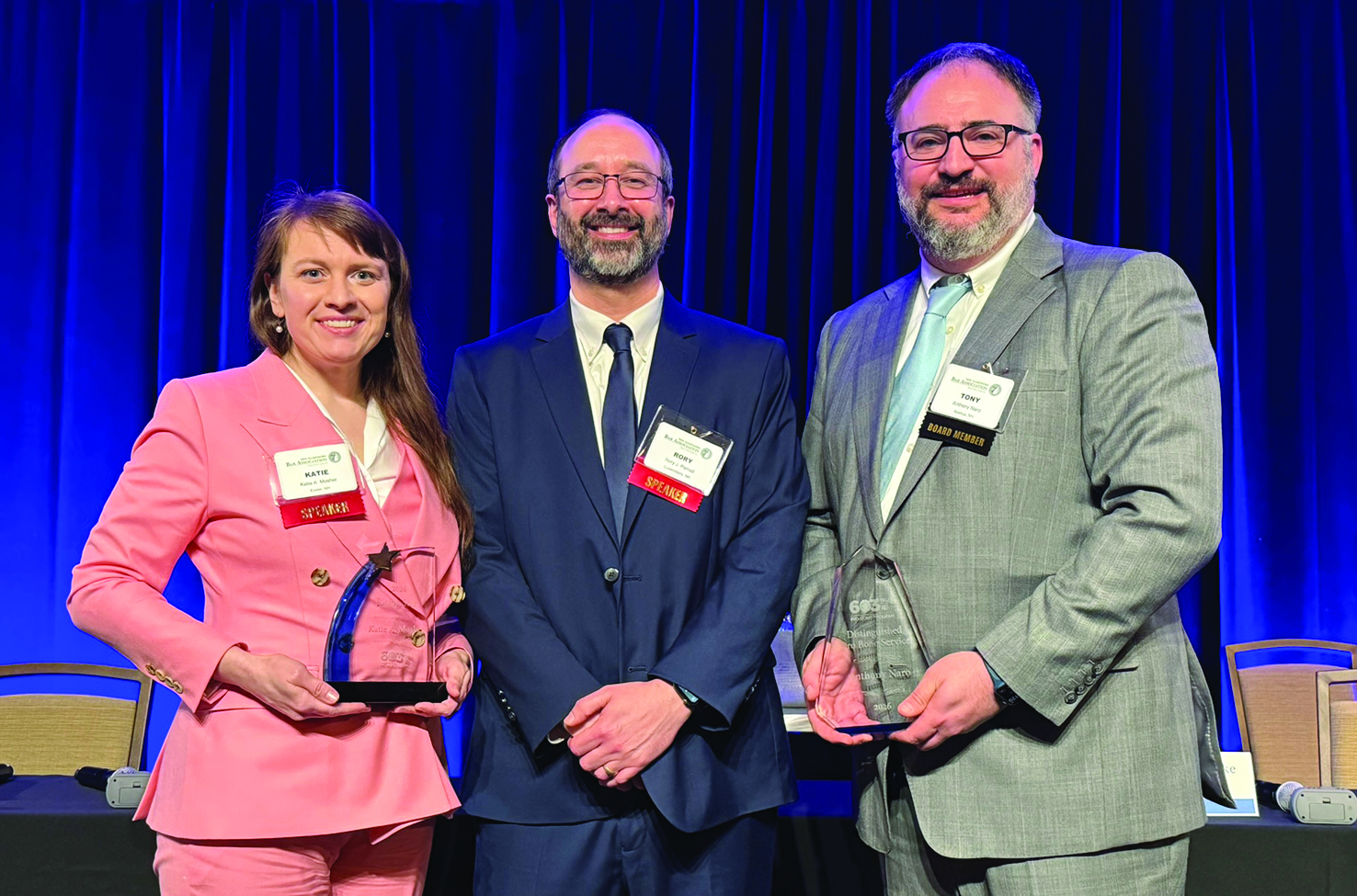
After lunch, Lick presented the MYM Awards, followed by 603 Legal Aid Vice Chair Rory Parnell, who presented the organization’s Pro Bono Awards (see facing page for the recipients).
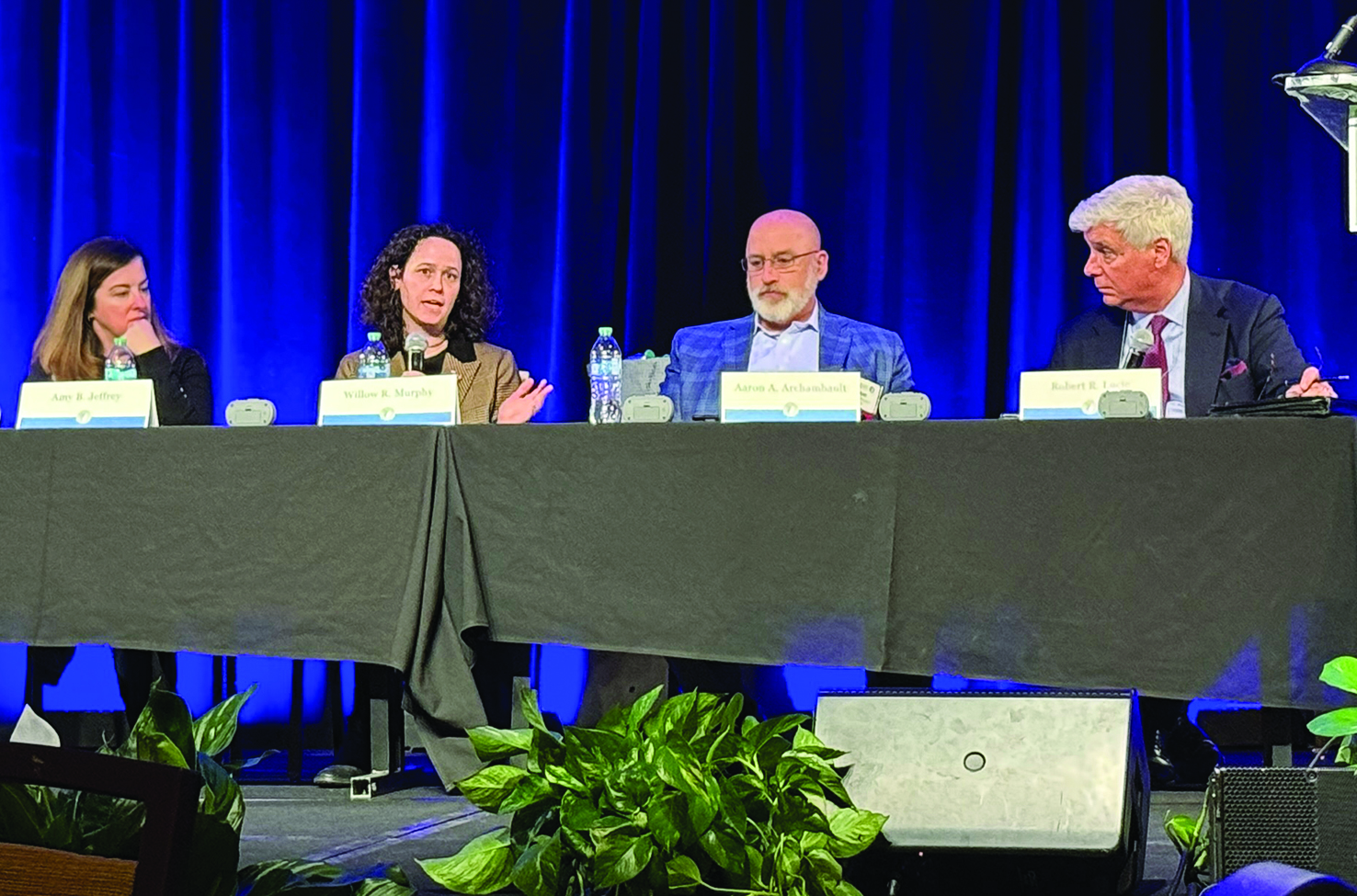
The program then shifted from constitutional history to emerging technology with a CLE addressing the growing role of AI in legal practice. Titled “Evaluating Artificial Intelligence Platforms,” a panel featuring members of the NHBA’s Special Committee on Artificial Intelligence was moderated by committee chair and NHBA President-Elect Bob Lucic. Panelists included Aaron Archambault, Amy Jeffrey, Willow Murphy, and Cassandra Rodgers.
The panel discussed practical considerations for attorneys assessing AI tools, including how to evaluate different platforms and incorporate them responsibly into day-to-day practice. Panelists examined the efficiencies and professional responsibilities associated with AI, offering guidance for navigating a rapidly evolving technological landscape.
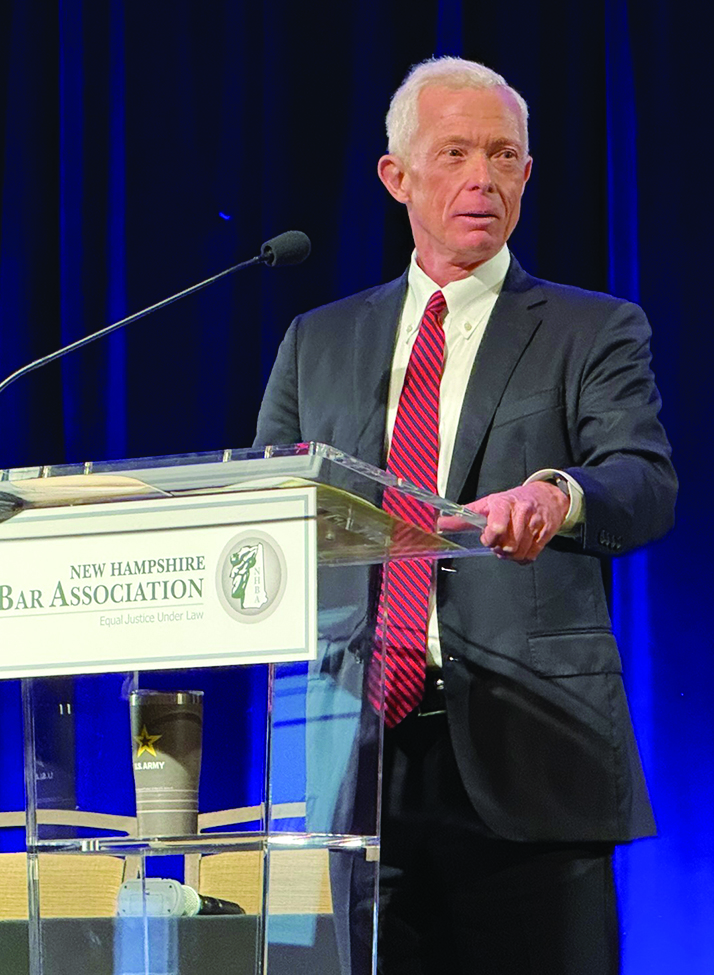
Lick then took to the podium to deliver brief remarks highlighting the profession’s longstanding commitment to civic engagement. Sharing results from a recent member survey, Lick noted that 92 percent of respondents reported volunteering in some capacity during the prior year, with many serving on nonprofit boards, municipal committees, and community organizations, and nearly one in five participating in Bar-sponsored civic programs.
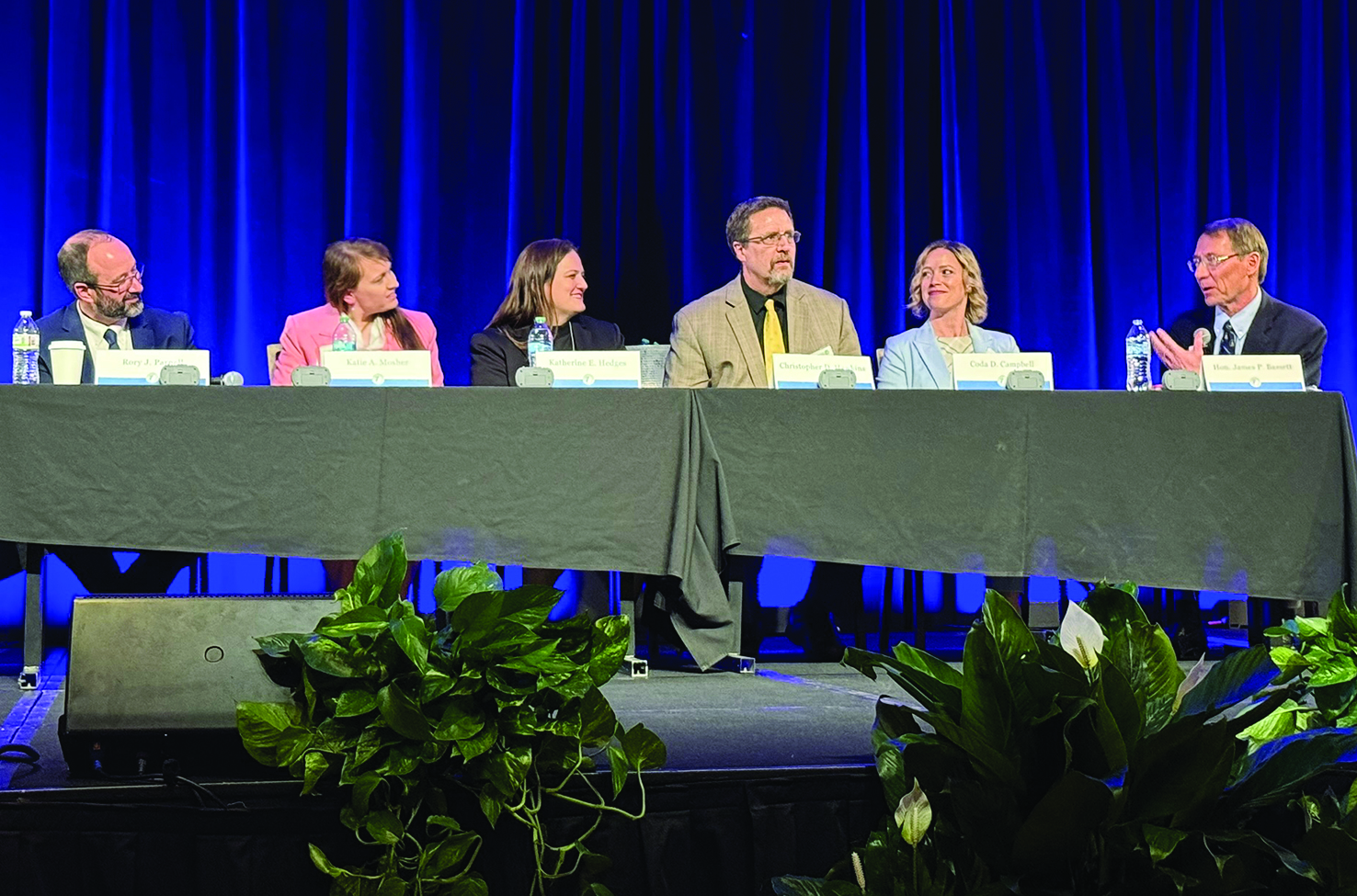
He emphasized the breadth of service undertaken by attorneys across the state and then introduced the subsequent panel, “The Importance of Community Engagement,” moderated by former NHSC Justice James Bassett, which featured Coda Campbell, Christopher Hawkins, Katherine Hedges, Katie Mosher, and Rory Parnell discussing their own experiences in community service.
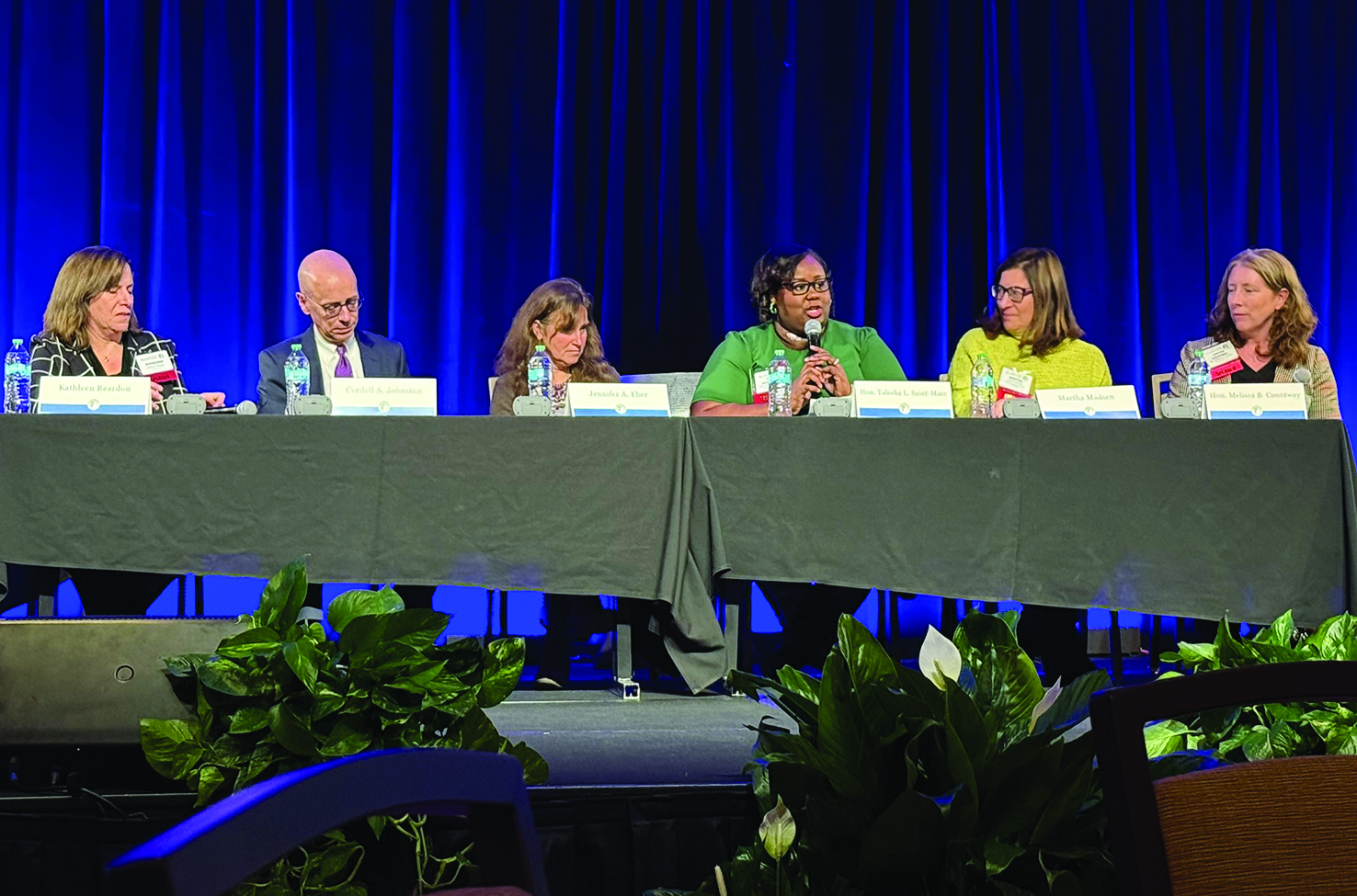
The final panel of the day, “Supporting Access to Justice: Court Initiatives and Opportunities for Attorney Engagement,” was moderated by NHSC Justice Melissa Countway and featured Cordell Johnston, New Hampshire Center for Nonprofits CEO Kathleen Reardon, NHBA Civics and Law Outreach Coordinator Martha Madsen, and NHBA Civics and Law Outreach Committee Co-Chairs US Magistrate Judge Talesha Saint-Marc and Jennifer Eber.
Panelists highlighted current court initiatives aimed at improving access to justice, including the Court Navigator Pilot Program, and outlined practical ways attorneys can assist litigants and support court operations. The discussion also explored opportunities for lawyers to engage with local government and nonprofit organizations, as well as efforts to strengthen civics education through lawyer-teacher partnerships and community outreach programs.
The after-hours social, sponsored by the NHBA’s New Lawyers Committee and typically held following the Midyear Meeting, was postponed due to the snowstorm. A new date will be announced soon.
The CLE sessions from the 2026 Midyear Meeting will be available online in the CLE catalog later this spring. Be sure to mark your calendars for the NHBA’s Annual Meeting, scheduled for June 12–14 at the Mountain View Grand in Whitefield.