By Tom Jarvis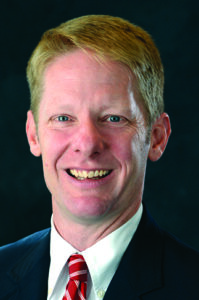
New Hampshire Superior Court Judge Daniel Will was confirmed in a 4–1 vote by the Executive Council on February 11 to serve on the New Hampshire Supreme Court, filling the seat vacated by Justice Anna Barbara Hantz Marconi, who reached the mandatory retirement age of 70 in February.
When announcing the nomination, Ayotte cited Judge Will’s background in both public service and the judiciary.
“Judge Will has served our state honorably as New Hampshire’s first Solicitor General and now on our Superior Court,” she said in a statement. “He has the qualifications, integrity, and commitment to public service Granite Staters expect in a Supreme Court Justice, and I am confident he will uphold the rule of law and our Constitution.”
Judge Will was appointed to the Superior Court in 2021 by former Governor Chris Sununu and has since presided over trial court matters across the state. Prior to joining the bench, he served as New Hampshire’s first solicitor general within the Department of Justice, leading the state’s appellate advocacy and coordinating constitutional litigation.
“I am honored to be nominated to sit on our state’s highest court, and I thank Governor Ayotte for the opportunity to continue serving New Hampshire,” Judge Will said in a press release at the time of his nomination. “Granite Staters expect fair, impartial decisions from their Supreme Court. If confirmed, I will strive each day to meet that expectation, uphold the rule of law, and help resolve disputes fairly and expeditiously.”
From Private Practice to Public Service
Judge Will earned his undergraduate degree from the University of Pennsylvania and his law degree from Boston College Law School, graduating summa cum laude in 1995. He served as editor-in-chief of the Boston College Law Review and is a member of the Order of the Coif.
After graduation, he clerked for Judge Morton Brody of the US District Court for the District of Maine and later for Judge Norman Stahl of the US Court of Appeals for the First Circuit.
He then spent two decades in private practice at Devine Millimet in Manchester, where he handled business and commercial litigation, including business disputes, intellectual property matters, and constitutional claims. He joined the firm in 1997 and became a shareholder in 2003, later serving on its board of directors.
Former NHBA Executive Director George Moore, who worked closely with Judge Will during that period, says he first met him when Will was still in law school.
“From the outset, he presented as a serious young lawyer,” Moore says. “Not only did his resume show that he was at the top of his class, but he was editor-in-chief of his law review.”
Moore says that background signaled more than academic achievement.
“From experience, I knew this meant not only that he was smart, but that he was very organized and hard-working,” he says.
Despite having an offer from a large Boston firm where he had clerked during law school, Judge Will chose to return to New Hampshire.
“I never thought it was the draw of my firm,” Moore says. “It was his maturity to know, as a New Hampshire native, that his growth as a lawyer and his enjoyment of life were much more attuned to Loudon, New Hampshire, than to downtown Boston.”
Solicitor General and Bar Leadership
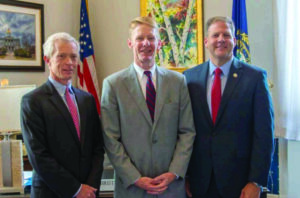
In 2018, Sununu appointed Judge Will as solicitor general, a position created by legislation to consolidate and strengthen the state’s appellate advocacy and to develop training programs for prosecutors statewide. In that role, Judge Will coordinated appeals before the state and federal appellate courts and worked on constitutional and government litigation.
Moore says Judge Will brought clarity and pragmatism to complex legal issues.
“He has always shown acutely clear legal thinking with a bent toward practical solutions,” Moore says. “In a word, not doctrinaire, but intellectually honest and flexible.”
While serving as solicitor general, Judge Will also remained active in Bar leadership. He was elected NHBA president in 2020, becoming the organization’s first president from the public sector.
That term coincided with the onset of the COVID-19 pandemic, as courts, state government, and the legal profession rapidly shifted to remote operations.
“Dan’s management and prioritization of challenges to state government and the Bar Association during that period was extraordinary,” says Moore, who was NHBA’s executive director at the time.
Judicial Service
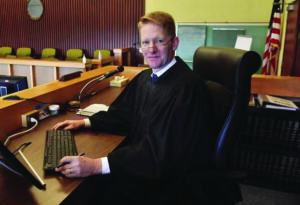
Judge Will’s judicial temperament and approach have drawn praise from colleagues on the bench.
“I know I speak for the entire Superior Court in congratulating Judge Will on his confirmation to our Supreme Court,” says Superior Court Chief Justice Mark Howard. “I had the unique privilege of presiding in Strafford Superior Court with Judge Will for the first couple of years of his judicial career. He possesses an exceptional intellectual capacity for the law; an unimpeachable ethical and moral character; an innate sense of fairness; and a humility that serves him well as a judge.”
Judge Howard says Judge Will’s experience on the trial court will be an asset on the state’s highest court.
“He will bring his insights as a trial judge to the Supreme Court,” he says. “I look forward to becoming a student of his New Hampshire jurisprudence.”
Moore says Judge Will approaches judicial decision-making with independence and restraint.
“Dan has always approached legal issues with a clean slate and will let the record and arguments speak for themselves,” he says. “He will decide issues on their merits and not be swayed by outside influences such as politics and social media.”
Judge Will has also served on numerous court- and Bar-related committees, including the New Hampshire Supreme Court Attorney Discipline Hearings Panel, the Judicial Performance Evaluation Advisory Committee, and the NHBA’s Committee on Cooperation with the Courts. He previously served on the New Hampshire Judicial Council and on the boards of several civic and educational organizations.
Looking ahead, Moore says Judge Will is motivated by service rather than status.
“He is more interested in seeing that the justice system gets it right than in achieving celebrity or economic largesse,” he says. “New Hampshire is lucky to have such a public servant, and the Governor and Executive Council have made a wise decision.”