

Check it out now by clicking the cover image.
Schedule
Gender Equality Breakfast
CLE Seminars
Awards
Post-Event Social
Participant Biographies
Schedule
Schedule at a Glance
| 7:15 – 8:30 a.m. | Gender Equality Breakfast (separately ticketed event) Former US Rep. Annie Kuster, Speaker Presentation of the Philip S. Hollman Award for Gender Equality |
| 8:00 – 8:45 a.m. | Registration and Check-In / Continental Breakfast / Exhibitor Showcase |
| 8:45 – 9:15 a.m. | President’s Welcome / Remarks from Chief Justice Gordon J. MacDonald / In Memoriam NHBA President Derek D. Lick, Chief Justice Gordon J. MacDonald |
| 9:15 – 10:00 a.m. | CLE: Self-Evident Truths: Principles from the Revolutionary Era Embodied in State Constitutions Professor Robert F. Williams (ret.), Rutgers Law School |
| 10:00 – 10:30 a.m. | Refreshment Break / Exhibitor Showcase |
| 10:30 – 10:45 a.m. | CLE: The Important Work of Building and Structuring the New Hampshire Constitution Hon. N. William Delker, New Hampshire Superior Court |
| 10:45 – 11:30 a.m. | CLE: The Vitality of the New Hampshire Constitution Professor Lorianne Updike Schulzke, Visiting Fellow, Information Society Project, Yale Law School |
| 11:30 a.m. – 12:15 p.m. | CLE: Why History Matters to the 21st Century Lawyer Moderated by Hon. N. William Delker, New Hampshire Superior Court |
| 12:15 – 1:45 p.m. | Business Meeting / Honors and Awards Luncheon |
| 2:00 – 3:00 p.m. | CLE: Evaluating Artificial Intelligence Platforms Panelists: Moderated by committee member Cassandra O. Rodgers |
| 3:00 – 3:15 p.m. | Refreshment Break / Exhibitor Showcase |
| 3:15 – 3:25 p.m. | CLE: The Power of Engagement NHBA President Derek D. Lick |
| 3:25 – 4:00 p.m. | CLE: The Importance of Community Engagement Panelists: Moderated by New Hampshire Supreme Court Justice James P. Bassett (ret.) |
| 4:00 – 4:45 p.m. | CLE: Supporting Access to Justice: Court Initiatives and Opportunities for Attorney Engagement Moderated by New Hampshire Supreme Court Justice Melissa B. Countway |
| 4:45 – 6:00 p.m. | Networking Social sponsored by the NHBA New Lawyers Committee All are welcome – no ticket or RSVP required. DoubleTree Hotel – Penstock Room |
Gender Equality Breakfast
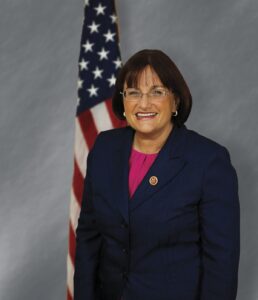
Philip S. Hollman Award for Gender Equality
The award, established on the occasion of Judge Hollman’s retirement from the Superior Court bench in 2003, honors Judge Hollman’s efforts as a stalwart advocate for gender equality in the legal system.
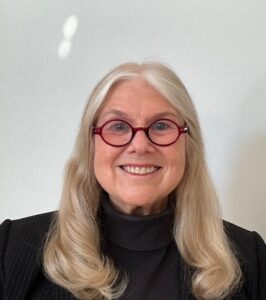
Nancy Richards-Stower
Nancy Richards-Stower is an employee rights attorney who has practiced for nearly five decades. She is a graduate of the inaugural class of Franklin Pierce Law Center, now the University of New Hampshire Franklin Pierce School of Law.
After early work in Washington, DC, including on Capitol Hill and with a civil rights litigation firm, Richards-Stower returned to New Hampshire, where she was appointed to the New Hampshire Commission for Human Rights. She later opened a solo employee rights practice in Merrimack in 1988, which she operated for more than 30 years. She continues to practice remotely from Maine.
Richards-Stower is a founding member of the New Hampshire chapter of the National Employment Lawyers Association, which she established in 1993. In 2003, she became the first woman from New Hampshire inducted into the College of Labor and Employment Lawyers. In 2015, she received the Granite State Advocate Award from the New Hampshire Association for Justice.
A member of the New Hampshire and Massachusetts bars, Richards-Stower presented on discrimination law at the New Hampshire Bar Association’s Annual Employment Law Updates for 22 consecutive years. She is also the inventor of the online litigation settlement tool TrytoSettle.com ®.
February 20, 2026 7:15 – 8:30 a.m. DoubleTree by Hilton Manchester Downtown 700 Elm Street Manchester, NH
CLE Seminars
Self-Evident Truths: Principles from the Revolutionary Era Embodied in State Constitutions
Professor Williams will explore how early state constitutions, drafted in the wake of colonial protest and revolution, incorporated ideas from the Declaration of Independence and other Revolutionary-era principles to craft new forms of government rooted in popular sovereignty; how these state constitutions not only rejected royal or parliamentary authority, but also codified individual and collective rights, setting the stage for later constitutional developments.
Professor Robert F. Williams (ret.), Rutgers Law School
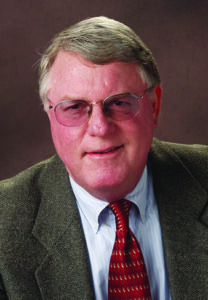
The Important Work of Building and Structuring the New Hampshire Constitution
New Hampshire was the first state to adopt a constitution – six months before the Declaration of Independence. While the 1776 Constitution was a temporary, wartime measure, the permanent constitution of 1784 is the second oldest constitution in America. Yet, most lawyers know little about its drafting and even less is understood about the thoughts of the framers. Judge N. William Delker will discuss his efforts to collect a comprehensive, online repository of documents relating to the drafting of the New Hampshire Constitution and its amendments.
Hon. N. William Delker, New Hampshire Superior Court
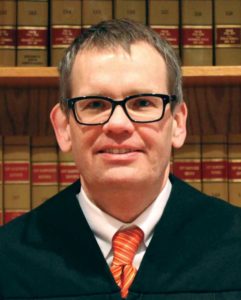
The Vitality of the New Hampshire Constitution
Professor Updike Schulzke will provide insight into the writing of the 1784 New Hampshire Constitution, which weaves the mini civil war between New Hampshire, Vermont, and New York over the Dartmouth Valley into the untold story of the New Hampshire constitution’s ultimate success. New Hampshire’s founding story provides an important case study for constitution-writing in American and around the world, as it is home to many firsts – the first modern constitution, first constitutional convention, first ratification, first true popular participation, and first one-issue referendum.
Professor Lorianne Updike Schulzke, Visiting Fellow, Information Society Project, Yale Law School
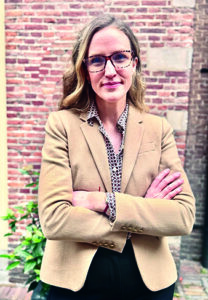
Why History Matters to the 21st Century Lawyer
With the 250th anniversary of New Hampshire’s first constitution and the Declaration of Independence upon us, such landmarks are important to commemorate the founding of our state and nation. But what practical relevance do the events of the Founding Era have for the practicing lawyer? The New Hampshire Supreme Court, in particular, has a long tradition of looking to this state’s constitution before considering violations of federal constitutional rights. What sources should lawyers consider when developing an argument that a state constitutional right means something different from its federal counterpart? A panel will explore how lawyers can craft state constitutional arguments in light of the history of constitutional provisions, the meaning of constitutional language, and other considerations.
Pamela Phelan, New Hampshire Public Defender, Professor Lorianne Updike Schulzke, Professor Robert F. Williams (ret.).
Moderated by Hon. N. William Delker, New Hampshire Superior Court

Evaluating Artificial Intelligence Platforms
The NHBA’s Special Committee on Artificial Intelligence will discuss practical ways to evaluate the various AI platforms available to attorneys today, as well as ways to use AI in the day-to-day practice of law.
Aaron A. Archambault, Amy B. Jeffrey, Willow R. Murphy, and NHBA President-Elect Robert R. Lucic, chair of the committee
Moderated by committee member Cassandra O. Rodgers
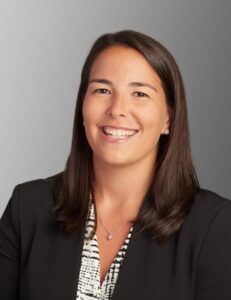
The Power of Engagement
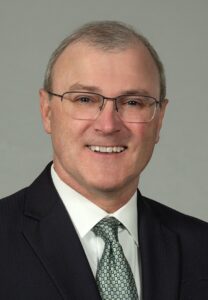
NHBA President Derek D. Lick will reflect on how sustained engagement in community service, nonprofit work, and local initiatives has strengthened his professional identity and deepened his impact as a lawyer. He will share how these experiences broaden perspective, build meaningful relationships, and ultimately enhance both effectiveness and fulfillment in legal practice.
Derek D. Lick, NHBA President
The Importance of Community Engagement
Attorneys from diverse backgrounds will share how they became involved with community organizations, courts, schools, and local initiatives. Their stories will illustrate how service builds confidence, expands professional opportunities, and helps lawyers refine judgment, empathy, and practical skills to advance their careers.
Coda D. Campbell, Christopher D. Hawkins, Katherine E. Hedges, Katie A. Mosher, and Rory J. Parnell
Moderated by Hon. James P. Bassett (ret.), New Hampshire Supreme Court
Supporting Access to Justice: Court Initiatives and Opportunities for Attorney Engagement
I. Overview of current court initiatives that support access to justice, including the Court Navigator Pilot Program, and concrete ways attorneys can assist litigants and support court operations.
II. Discussion of practical opportunities for attorneys to engage with municipal and local government, nonprofits, and community-based service organizations.
III. Examination of civics education, lawyer-teacher partnerships, and initiatives that bring law and civic engagement into classrooms and communities.
Cordell A. Johnston, Kathleen Reardon, Hon. Talesha L. Saint-Marc, Jennifer A. Eber, and Martha Madsen
Moderated by Hon. Melissa B. Countway, New Hampshire Supreme Court, Access to Justice Commission Co-Chair
Awards
Vickie M. Bunnell Award for Community Service
This award was instituted in 1998 to honor the memory of Vickie M. Bunnell (“A Country Lawyer”) and to applaud the community spirit that is a hallmark of our profession. It is presented to an attorney from a small firm (four or fewer attorneys) who has exhibited dedication and devotion to community by giving of their time and talents, legal or otherwise.
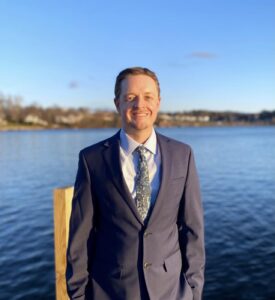
James P. Cowles
Walker & Varney, PC
James Cowles is a partner at Walker & Varney, PC, in Wolfeboro, where he maintains a broad general practice. His work includes civil litigation, family law, criminal and DUI/DWI defense, personal injury, civil rights, probate matters, and real estate and conservation easements.
He received his BS, magna cum laude, in environmental conservation from the University of New Hampshire (2004) and his JD from Vermont Law School (2008), where he also completed coursework toward an MSEL.
Before entering the legal field, Cowles worked as a community organizer. He began his legal career with the New Hampshire Public Defender in Laconia. He remains deeply active in his community, currently serving as board chair of the Makers Mill in Wolfeboro and as town moderator for Brookfield. He is also participating in the NHBA Civics & Law Outreach Program’s Street Law initiative, partnering with a Brewster Academy history teacher throughout the 2025–2026 school year to engage students in civics education.
Cowles completed the NHBA Leadership Academy in 2015. His past service includes nine years on the board of The Nick in Wolfeboro; nearly seven years on the board of the Appalachian Mountain Teen Project; nine years on the Carroll County Bar Association board; and more than a decade volunteering at Moose Mountains Regional Greenways’ annual Woods, Water, and Wildlife Festival.
He is a member of the New Hampshire Association of Criminal Defense Lawyers (NHACDL) and the New Hampshire Association for Justice (NHAJ). He has served multiple times as faculty for the NHAJ Trial Academy and has presented at an NHACDL DUI/DWI seminar. He also volunteers with the DOVE Project, representing victims of domestic violence, and with Veterans Legal Justice, assisting service members, veterans, and their families.
Distinguished Service to the Public Award
This award is presented to the nominee who best exhibits service to the public on behalf of the administration of justice.
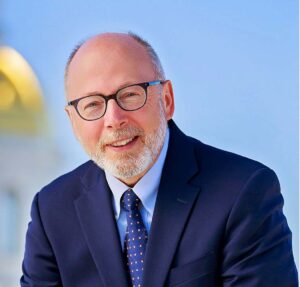
Andru H. Volinsky
Andru Volinsky is currently “flunking retirement” by publishing his first book, The Last Bake Sale, writing a weekly Substack column on education, tax policy, and politics, and continuing to litigate school funding cases.
After graduating from the George Washington School of Law – with few honors but one jury trial under his belt – Volinsky began a lifelong effort to defend against the death penalty as a young instructor at the University of Tennessee School of Law. In just two years, he and a fellow instructor defended three capital cases with the help of law students and whatever resources they could gather from the university community.
Volinsky moved to New Hampshire after the birth of his first child and after his wife Amy was laid off during federal cuts to the Legal Services Corporation. He joined the New Hampshire Public Defender in Manchester, where he tried serious felony and murder cases. His prior experience with capital litigation was not widely known at the time, and local prosecutors underestimated the “rookie.”
By 1985, Volinsky had transitioned to private practice – first in Manchester, then in Concord, and later with a regional firm with offices in Manchester and Portland. While building a civil litigation practice, he continued to handle death penalty cases as pro bono counsel. One case, Gray v. Mississippi, brought him before the United States Supreme Court before he turned 30. Another case lasted three decades and resulted in the commutation of his client’s death sentence just five hours before the scheduled execution.
In addition to his death penalty work, Volinsky served as legal counsel for the New Hampshire ACLU in the 1990s and was lead counsel to the plaintiffs in the Claremont school funding litigation for roughly two decades. Although the resulting reforms were never fully implemented, the team of volunteer lawyers that Volinsky led secured a landmark ruling from the New Hampshire Supreme Court holding that the state’s school funding system violated the New Hampshire Constitution. State support for public education rose from six percent to 22 percent over the last 25 years – after that, the rest has been politics.
Award for Outstanding Service in Public Sector/Public Interest Law
The Public Sector/Public Interest Law Award is presented to a member of the Bar, or an organization employing eligible members, with at least five years of service in government, military, law enforcement, or public interest law services (including prosecution, public defense, legal advocacy in low-income communities, or for individuals with disabilities at a nonprofit organization), or at another nonprofit organization.
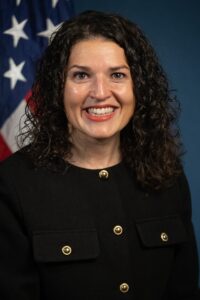
Heather A. Cherniske
US Attorney’s Office
Heather Cherniske is an assistant United States attorney for the District of New Hampshire. A New Jersey native, she moved to New Hampshire to attend the University of New Hampshire Franklin Pierce School of Law.
After graduating, Cherniske served as a law clerk at the Rockingham County Superior Court. She then worked as an assistant city prosecutor for the City of Concord before joining the New Hampshire Attorney General’s Office, where she prosecuted and investigated Medicaid fraud, public integrity offenses, drug distribution cases, and homicides. She later served with the New Hampshire Department of Employment Security, prosecuting unemployment fraud cases for three years.
In addition to her public service work, Cherniske has served in various roles on the New Hampshire Bar Association Board of Governors and actively volunteers at the law school.
Distinguished Service Award
This award is presented to a person or organization who has provided exceptional support to the Pro Bono Program. Recipients typically volunteer their time and expertise not only by providing direct client representation, but also by mentoring newer volunteer attorneys, supporting staff on difficult legal issues, and advocating for New Hampshire’s most vulnerable residents in the courts. The Distinguished Service Award recognizes the unsung heroes of the Pro Bono Program.
Paul Maggiotto
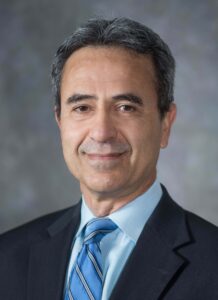 Paul Maggiotto, a graduate of Northeastern University School of Law, is a passionate and deeply committed advocate for some of the most vulnerable individuals in New Hampshire.
Through his work with the DOVE Project, Maggiotto has made a profound difference in the lives of survivors of domestic violence, sexual assault, and stalking, helping them secure safety, stability, and the opportunity for a fresh start. In 2025 alone, he took on nine DOVE cases and has already accepted his first case for 2026.
Maggiotto consistently goes above and beyond for his clients. In one particularly impactful 2025 case, he stepped in immediately following a protective order hearing and began the divorce process without hesitation. When the client expressed concern to a crisis center advocate about the cost of legal representation, Maggiotto’s response spoke volumes about his character: “There is no way I would let you go up against them on your own.”
Since then, Maggiotto has dedicated more than 72 hours of pro bono service to that client, once again demonstrating his unwavering commitment to ensuring access to justice for those who need it most.
Maggiotto’s service extends beyond his DOVE advocacy. He has also handled several criminal record annulment matters and, in one case, filed an appeal after an initial petition was denied – further reflecting his persistence and dedication to his clients.
Anthony Naro
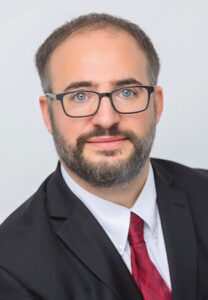 Anthony Naro, a graduate of Suffolk University Law School, has been a dedicated volunteer with 603 Legal Aid since 2021. Much of his pro bono work has focused on the DOVE Project, where he provides critical legal assistance to survivors of domestic violence, sexual assault, and stalking.
Over the past two years, Naro has taken on seven DOVE cases, along with several criminal record annulment matters. He is deeply committed to ensuring that courts reach fair and legally sound outcomes for his clients.
When cases progress to the Supreme Court level, Naro willingly steps in – despite the fact that many DOVE attorneys are understandably hesitant to take on appellate matters due to their complexity and specialized nature. His willingness to accept these challenging cases ensures that DOVE clients continue to receive skilled advocacy and the justice they deserve.
Naro’s contributions extend beyond individual representation. In 2024, he served as a presenter at the DOVE Continuing Legal Education program, providing valuable instruction to current and prospective DOVE volunteers on ethical considerations unique to these cases. His leadership and expertise strengthen not only individual advocacy efforts, but the DOVE Program as a whole.
Jonathan Ross Award
This award was named for Jon Ross in 1988 to recognize his work on the state and national level to mobilize bar leaders to support civil legal services for the poor, along with his unsurpassed leadership and dedication to pro bono legal services.
Robert Shepard
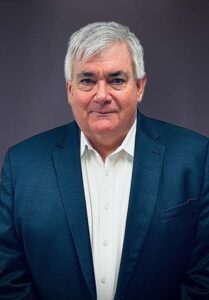 Robert Shepard, a graduate of UNH Franklin Pierce School of Law, has been a stalwart volunteer with 603 Legal Aid’s Pro Bono Program, demonstrating an exceptional commitment to ensuring access to justice for individuals who cannot afford legal representation. Over the course of his service, he has contributed more than 500 hours of pro bono legal representation, focusing primarily on family law matters.
Shepard is widely applauded for his willingness to take on particularly complex and contentious cases – matters that many volunteers might hesitate to accept. His thoughtful advocacy, legal acumen, and unwavering professionalism have produced meaningful outcomes for his clients, who consistently report feeling genuinely supported and heard throughout their representation.
Shepard’s dedication to service extends beyond the Pro Bono Program into both the broader legal community and his local community. He has volunteered with numerous agencies and has served on several boards. He is also a recipient of the Ted Jordan and Joe Gall Humanitarian Award from the Nashua Bar. His leadership, generosity of time, and commitment to high-quality representation set a standard for pro bono engagement and reflect the core values of the legal profession.
Rising Star Award
Rising Stars make valuable contributions during their first five years as attorneys and have demonstrated commitment and dedication to helping the Pro Bono Program increase access to justice for low-income and disadvantaged individuals throughout the Granite State .
Katie Mosher
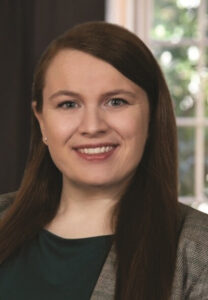 Committed to advancing access to justice through pro bono service and community engagement, Katie Mosher has volunteered extensively with 603 Legal Aid’s Concord District Court Eviction Defense Clinic. She has participated in numerous clinics, including responding to last-minute requests when court dockets expanded and additional volunteers were needed.
Through this work, Mosher has donated her time to assist tenants facing the possibility of becoming unhoused by providing legal advice, negotiating agreements, and helping individuals navigate the eviction process. She approaches this work with compassion and steadfast advocacy, demonstrating a strong commitment to supporting underserved members of the community.
A 2021 graduate of UNH Franklin Pierce School of Law’s Daniel Webster Scholars Program and a Rudman-Peterson Fellow, Mosher continues to demonstrate a strong dedication to public service through her ongoing involvement in both the legal community and the broader community she serves.
Post-Event Social

Participant Biographies
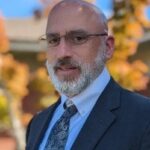
Aaron A. Archambault
Aaron Archambault is a Hopkinton-based attorney who believes the future of law lies in the thoughtful and responsible use of technology. A graduate of New England Law | Boston, he combines traditional legal advocacy with a technical mindset to address modern challenges in legal practice.
Archambault is a recognized voice in the New Hampshire legal community on legal technology and governance. He serves as a member of the NHBA Special Committee on Artificial Intelligence and the NHBA Ethics Committee.
Beyond individual representation, Archambault is committed to systemic change in the profession. He advocates for the adoption of technology that helps attorneys work more efficiently, with the goal of expanding access to justice and improving the delivery of legal services.
James E. Bassett
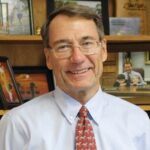
James Bassett served as a justice of the New Hampshire Supreme Court (NHSC) from 2012 until September 2025, when he returned to private practice at Orr & Reno in Concord. His current practice focuses on appellate matters, mediation, and arbitration.
Before his appointment to the Court, Bassett spent 27 years as a trial and appellate lawyer at Orr & Reno, where his practice concentrated on constitutional law, commercial litigation, medical malpractice defense, First Amendment and Right-to-Know issues, and land use matters. He argued numerous cases before the NHSC and the United States Court of Appeals for the First Circuit, including a 2002 landmark decision securing the right of the media to bring cameras into New Hampshire trial courts.
Bassett is a graduate of Dartmouth College and the University of Virginia School of Law. He served as a law clerk to Andrew Caffrey, then chief judge of the United States District Court in Boston, and later practiced at Hale and Dorr in Boston before moving to Canterbury, New Hampshire, where he and his wife have lived for 40 years.
During his time on the NHSC, Bassett served as co-chair of the Court’s Committee on the Judiciary and the Media and co-chair of the Access to Justice Commission. He was the Court’s representative to the Judicial Council and liaison to the New Hampshire Bar Foundation and the New Hampshire Bar Association. He was appointed by Chief Justice John Roberts to serve two three-year terms on the Federal Advisory Committee on Rules of Evidence. In 2023, he earned an LLM from Duke Law School’s Master of Judicial Studies Program.
Bassett has also been deeply involved in nonprofit and civic service, including serving as chair of the Merrimack County United Way Campaign and on the boards of New Hampshire Public Radio, the Capitol Center for the Arts, Conservation New Hampshire, the Friends of the Norris Cotton Cancer Center, and Canterbury Shaker Village. He served on the Campaign Leadership Council for the Campaign for Legal Services and was active in Canterbury town government for more than two decades, serving multiple terms on the Board of Selectmen and the Planning Board, including as chair of each.
Coda D. Campbell

Coda Campbell is a solo practitioner at Campbell Law, PLLC, a fully remote firm. Her practice focuses on military law, veterans’ benefits, and criminal defense, with representation of servicemembers and veterans worldwide.
Campbell is a veteran Army officer who served eight years in the United States Army, including one combat deployment. She is a VA-accredited attorney through the Department of Veterans Affairs and opened her solo practice to serve veterans and servicemembers. From the outset, she has taken pro bono and indigent criminal defense cases.
Campbell is a graduate of the University of New Hampshire Franklin Pierce School of Law and was admitted directly to practice in New Hampshire through the Daniel Webster Scholar Honors Program. She has twice been recognized by the New Hampshire Supreme Court as a top contributing pro bono attorney (2023–2024 and 2024–2025) and received the 603 Legal Aid Pro Bono Rising Star Award in 2025.
She is serving her third term on the NHBA Special Committee on Attorney Wellness. Campbell was admitted to practice in Florida in December 2024 and relocated her practice there in 2025. Within three months of her arrival, she was recognized as a 2025 Guardian of Justice for her pro bono sealing and expungement work. She continues to maintain significant professional ties to New Hampshire.
Hon. Melissa B. Countway

Melissa Countway is the fourth woman and 111th justice of the New Hampshire Supreme Court (NHSC). She joined the Court on January 2, 2024. Justice Countway was previously nominated by Governor Sununu and unanimously confirmed by the Executive Council to the New Hampshire Circuit Court in 2017, where she served for more than six years. She is the first Circuit Court judge appointed to the New Hampshire Supreme Court.
A New Hampshire native, Justice Countway graduated from Alton High School and earned a bachelor’s degree in mathematics from the University of New Hampshire in 1993, followed by a master’s degree in education in 1994. After teaching middle school math and science for five years, she attended the University of North Carolina at Chapel Hill School of Law, where she was a member of the North Carolina Law Review, a student leader with the Innocence Project, and was inducted into the Order of the Coif.
Justice Countway returned to New Hampshire and clerked at the NHSC for Chief Justice Brock in 2002. She later practiced law in Concord with Orr & Reno before returning to her hometown to found Alton Law Offices, PLLC, where she maintained a general practice with a focus on real estate and land use law. She also served as a police prosecutor for the Alton Police Department and, from 2011 to 2017, was elected to three terms as Belknap County attorney, handling felony prosecutions in Superior Court.
Throughout her career, Justice Countway has been active in community and professional service. She is a founding member of the Alton Centennial Rotary Club and the Alton Business Association and has served on numerous boards, including the New Hampshire Charitable Foundation, Alton Elderly Housing, Inc., and the Lakes Region Conservation Trust. She also served as a council member of the Police Standards and Training Council.
Hon. N. William Delker
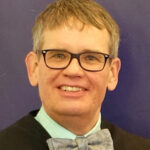 Judge N. William Delker is an associate justice of the New Hampshire Superior Court. He was appointed in August 2011. He served as supervisory judge for the Rockingham County Superior Court from July 2014 until December 2019, when he transferred to Hillsborough Superior Court–North in Manchester to fill a vacancy. In April 2022, he was appointed supervisory judge of that court.
Judge Delker is an active member of the Supreme Court Advisory Committee on Rules, the Judicial Conduct Committee, the New Hampshire Lawyers Assistance Program Board of Trustees, the NHBA Leadership Academy, and the Superior Court Law Clerk Committee, which he chairs. He is also involved in civics education with area schools and teaches Remedies and State Constitutional Law as an adjunct professor at University of New Hampshire Franklin Pierce School of Law.
Prior to joining the bench, Judge Delker served as a senior assistant attorney general in the New Hampshire Attorney General’s Office, where he was a prosecutor for 13 years. During his tenure, he handled numerous high-profile homicide cases, including the capital murder prosecution of Michael Addison. He founded the New Hampshire Cold Case Unit, prosecuted white collar and public integrity crimes, and worked in the appellate unit. He also served as bureau chief of the Criminal Justice Bureau.
Before joining the Attorney General’s Office, Judge Delker was an associate at Testa, Hurwitz & Thibeault in Boston and a law clerk for New Hampshire Supreme Court Justice Sherman Horton. He earned his JD, summa cum laude , from American University’s Washington College of Law and his undergraduate degree, summa cum laude , from the University of Massachusetts Amherst.
Jennifer A. Eber
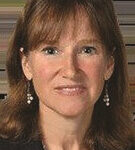
Jennifer Eber is the litigation director at the Disability Rights Center–New Hampshire. Prior to that, she was a shareholder/director at Orr & Reno, PA, where she litigated cases and provided employment law counsel. She also has experience in alternative dispute resolution and currently serves as a mediator for the New Hampshire Commission for Human Rights.
Eber earned her AB from Dartmouth College and her JD from Boston College Law School. She is co-chair of the NHBA Civics and Law Outreach Committee and is the author of Beyond High School: A Guide to Your Rights and Responsibilities . She has been active in civics education since the early 1990s, when she first joined the NHBA Law Related Education Committee.
Eber is also a member of the New Hampshire Supreme Court’s Access to Justice Commission and the Governor’s Commission on the Humane Treatment of Animals.
Christopher D. Hawkins
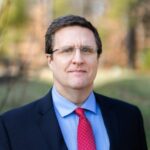 Christopher Hawkins is an experienced litigator at Donahue, Tucker & Ciandella, PLLC, in Exeter. He represents clients in matters involving malpractice and professional liability, professional discipline and licensing, construction claims, municipal law, land use and environmental issues, products liability, complex commercial and civil disputes, data breaches, and related concerns.
Hawkins graduated from Middlebury College in 1988 and from the University of Connecticut School of Law in 1992. He is admitted to practice in the state and federal courts of New Hampshire, Massachusetts, Maine, and Connecticut, as well as before the First Circuit Court of Appeals.
He has been a member of the NHBA Ethics Committee for more than 10 years and is also a member of the American Bar Association Center for Professional Responsibility, the Association of Professional Responsibility Lawyers, and the Charles C. Doe Inn of Court. Hawkins has published several articles and has presented numerous seminars to lawyers, engineers, and contractors on topics including drones, contract law, risk management, professional liability, and ethics.
Katherine E. Hedges
 Katherine Hedges is a shareholder at Rath, Young & Pignatelli, PC, in Concord. She practices in the Renewable/Alternative Energy and Utility Practice Group and the Business and Finance Practice Group. Her work includes assisting companies with project finance and transactions involving the acquisition, sale, and development of renewable energy projects.
In addition to her renewable energy practice, Hedges has broad experience representing clients in commercial and residential real estate matters, contract negotiation, and mergers and acquisitions.
Hedges is the president of the New Hampshire Women’s Bar Association. She is also a member of the NHBA’s Corporation, Banking & Business Law Section, the Environmental & Natural Resources Section, and the Real Property Law Section, and she serves on the NHBA Leadership Academy Steering Committee.
Amy B. Jeffrey

Amy Jeffrey is chief business officer of Evolution Credit Partners, where she draws on more than two decades of legal and operational experience to support business strategy and growth. Her background includes corporate finance and complex transactions, as well as building scalable frameworks for high-growth companies.
Jeffrey is a member of the NHBA Special Committee on Artificial Intelligence. She earned her JD from Southern Methodist University.
Cordell A. Johnston
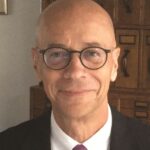 Cordell Johnston has practiced law in New Hampshire since 1984, including 19 years at Orr & Reno in Concord and 18 years as government affairs counsel at the New Hampshire Municipal Association. He now maintains a solo practice limited to representing municipalities.
Johnston is the co-author, with C. Christine Johnston, of four volumes on municipal law in the New Hampshire Practice Series (original author Peter Loughlin). He has written extensively and presented frequently on the Right-to-Know Law, land use regulation, town meeting, and other municipal law topics.
He has served the Town of Henniker as a selectman and planning board chair and has been town moderator since 2018. Johnston graduated from Princeton University in 1981 and from Boston University School of Law in 1984.
Derek D. Lick
 Derek Lick is a director and shareholder at Orr & Reno in Concord, where he concentrates his practice on litigation and real estate and land use law. He is admitted to practice in all New Hampshire state courts and the United States District Court for the District of New Hampshire.
Lick is president of the New Hampshire Bar Association Board of Governors and a member of the NHBA Finance Committee and the Leadership Academy Steering Committee. He is also a member of the NHBA Appellate Law, Real Property Law, and Business Litigation Sections and an elected member of the Federation of Defense and Corporate Counsel.
He serves as moderator for the Town of Sutton and the Kearsarge Regional School District and as chair of the Sutton Zoning Board of Adjustment. Lick also serves on the board of the Concord Lake Sunapee Rail Trail, a nonprofit organization he helped found and for which he provides pro bono real estate and easement counsel.
Lick earned his BS from Boston University and his JD from Vanderbilt University Law School.
 Robert R. Lucic
Robert Lucic serves as chair of the Litigation Department at Sheehan Phinney Bass & Green, PA, in Manchester. For more than 25 years, he has represented manufacturing clients – including aerospace, defense, and high-tech companies – as well as municipal governments. His practice focuses on environmental litigation and arbitration, and he also provides strategic counseling to industrial clients and small businesses.
Lucic is president-elect of the New Hampshire Bar Association and chair of the NHBA Special Committee on Artificial Intelligence. He is a member of the NHBA Environmental and Natural Resources Law Section and a fellow of the New Hampshire Bar Foundation.
At Sheehan Phinney, Lucic serves as the firm’s liaison to Lex Mundi, where he is chair of the North American Environmental Practice Group. He also serves as president of the board of the Squam Lakes Association.
Lucic earned his BA from Dartmouth College and his JD from the University of Chicago Law School.
Martha Madsen
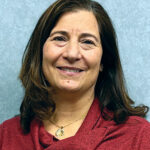 Martha Madsen is the Civics and Law Outreach Coordinator at the New Hampshire Bar Association. An experienced educator and civic engagement leader, she holds degrees from Colgate University, the Harvard Graduate School of Education, and the Simmons School of Social Work, and earned a graduate certificate in leadership in curriculum and instruction from the University of New Hampshire.
Madsen has designed and facilitated professional development, curriculum, and community conversations in both Massachusetts and New Hampshire public schools. She previously served as Executive Director of NH Civics, where she helped expand statewide civic education initiatives, including the New Hampshire Kid Governor program, and supported the growth of civic learning coalitions and partnerships. She currently serves on the board of the New Hampshire Council for the Social Studies.
 Willow R. Murphy
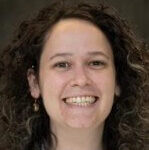
Willow Murphy is corporate counsel at Precisely Software Incorporated in Burlington, Massachusetts, a company specializing in data and software solutions. After beginning her career in product management, she now advises the company on litigation, product development, intellectual property, and other business matters.
Rory J. Parnell

Rory Parnell is an attorney with the Law Offices of Parnell, Michels & McKay, PLLC, in Londonderry. He is a graduate of Southern New Hampshire University and New England Law | Boston. Parnell worked full time for the then–Law Offices of Parnell & McKay throughout law school and has been with the firm since 2002. He has been a partner at the firm since 2017 and dedicates his practice primarily to civil litigation.
Parnell’s work focuses on injury cases (including motor vehicle and motorcycle collisions, slip-and-fall and trip-and-fall matters, and dog bites), workers’ compensation, and real estate litigation.
He is a member of the NHBA Committee on Lawyer Referral Services, the New Hampshire Association for Justice, and the Massachusetts Academy of Trial Lawyers. He also serves as vice chair of the board of directors for 603 Legal Aid and is president of The Bridge Project, a 501(c)(3) nonprofit in Lincoln.
Outside his legal work, Parnell volunteers as a youth sports coach, including for his son’s soccer teams in the spring and fall, and he currently assists as a coach for his son’s travel hockey team.
 Pamela E. Phelan
Pamela Phelan is a trial and appellate lawyer with the New Hampshire Public Defender’s Office in Concord. She previously served as litigation director at the Disability Rights Center–NH, chief deputy clerk at the United States District Court for the District of New Hampshire, and a shareholder at Orr & Reno, PA.
From 2016 through 2023, Phelan taught pretrial and trial advocacy skills to Daniel Webster Scholars at the University of New Hampshire Franklin Pierce School of Law. In 2021–2022, she served as chair of the New Hampshire Bar Association Committee for Cooperation with the Courts.
Phelan is a graduate of Creighton University School of Law.
Kathleen Reardon
 Kathleen Reardon is the chief executive officer of the New Hampshire Center for Nonprofits in Concord, where she leads the strategic direction and overall operations of the Center – a statewide nonprofit association dedicated to strengthening the capacity, voice, and visibility of New Hampshire’s nonprofit sector.
Reardon joined the Center in 2016, bringing extensive experience in both the for-profit and nonprofit sectors. Her background includes public and media relations, foundation and corporate giving, community development, and volunteer and event management.
Reardon earned her BA in political science from the College of the Holy Cross and her MA in liberal studies and social sciences from Wesleyan University.
Cassandra Rodgers
 Cassandra Rodgers is an associate at Sheehan Phinney Bass & Green, PA, in Manchester, where she is a member of the civil litigation group. Her practice includes civil disputes involving employment, contract, commercial, land use, and trust matters.
Rodgers is admitted to practice in New Hampshire, Massachusetts, and Maine and is a member of the NHBA Special Committee on Artificial Intelligence. She earned her JD from the University of New Hampshire Franklin Pierce School of Law.
Hon. Talesha L. Saint-Marc
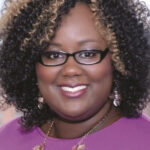
Honorable Talesha L. Saint-Marc is a United States magistrate judge for the District of New Hampshire. Before her appointment to the bench, she served as a law clerk in the New Hampshire Supreme Court and Superior Court for three years and later practiced labor and employment law with Bernstein, Shur, Sawyer & Nelson, PA.
Judge Saint-Marc is co-chair of the NHBA Civics and Law Outreach Committee. Her community service includes serving on the board of directors of New Hampshire Legal Assistance, as vice president of the Rivier University Board of Trustees, as president of the board of directors for the Circle Program, and as a volunteer with Big Brothers Big Sisters of Greater Nashua.
A lifelong New Hampshire resident, Judge Saint-Marc earned her undergraduate degree from Franklin Pierce College, graduating summa cum laude, and received her law degree from Northeastern University.
Lorianne Updike Schulzke
 Lorianne Updike Schulzke is a Visiting Associate Professor of Law at Yale Law School. She comes from the faculty of Northern Illinois University College of Law, where she teaches Constitutional History, Public International Law, Professional Responsibility, and Torts, and has also served as a Visiting Associate Professor of Law at Penn State Law, teaching Constitutional Law and Constitutional Negotiations. Her expertise lies in constitutional interpretation and comparative constitutionalism, with particular interest in United States and early state constitutions, constitution-writing processes in the Middle East and North Africa, and the Supreme Court’s use of history.
Her work has appeared, or is forthcoming, in the University of Chicago Law Review , the International Journal of Constitutional Law , the Connecticut Law Review , the Harvard Journal of Law and Public Policy , the University of Pennsylvania Journal of Constitutional Law , and the Columbia Journal of Race and Law . Her historical research has been cited by the United States Supreme Court, and she frequently leads student teams in filing historical amicus briefs in appellate constitutional cases.
Updike Schulzke was previously a Visiting Fellow at Yale Law School (2018–20) and the Olin-Searle Fellow at the Yale Law School Information Society Project (2020–21). She has held teaching fellowships or adjunct appointments at New England Law, Penn State, and Brigham Young University. She also founded ConSource.org (the Constitutional Sources Project), the first free online library of the United States Constitution’s historical sources. From 2010 to 2018, as president of Libertas Constitutional Consulting, she advised the Libyan constitution-writing process and helped found the Quill Project at Pembroke College, Oxford, which now owns ConSource.
Robert Williams

Robert F. Williams is Distinguished Professor of Law Emeritus at Rutgers University School of Law and former Director of the Center for State Constitutional Studies. Professor Williams earned his BA, cum laude , in 1967 from Florida State University, where he was elected to Phi Beta Kappa and Phi Kappa Phi. He received his JD, with honors, in 1969 from the University of Florida School of Law, where he served as executive editor of the law review and was a member of the Order of the Coif. He earned an LL.M. in 1971 from New York University School of Law as a Ford Foundation Urban Law Fellow, and a second LL.M. in 1980 from Columbia University Law School as a Chamberlain Fellow.
Professor Williams has served as legislative advocacy director and executive director of Florida Legal Services, Inc.; an International Legal Center Fellow in Kabul, Afghanistan; and a reporter for the Florida Law Revision Council’s Landlord–Tenant Law Project. He has also worked as a legislative assistant to Florida Senator D. Robert Graham, a staff attorney with Legal Services of Greater Miami, Inc., and a law clerk to Chief Judge T. Frank Hobson of the Florida Second District Court of Appeal.
His books include The Law of American State Constitutions (2d ed. 2023); The New Jersey State Constitution (3d ed. 2023); and State Constitutional Law: Cases and Materials (5th ed. 2015). He is also coauthor, with Hetzel and Libonati, of Legislative Law and Statutory Interpretation: Cases and Materials (4th ed. 2008). He has written extensively on state constitutional law, including equality guarantees, the role of statutes in common-law adjudication, founding-era state constitutions, and the methodology and legitimacy of independent state constitutional adjudication, with articles appearing in journals such as the George Washington Law Review , William and Mary Law Review , South Carolina Law Review , Texas Law Review , Temple Law Review , and Notre Dame Law Review .