By Tom Jarvis
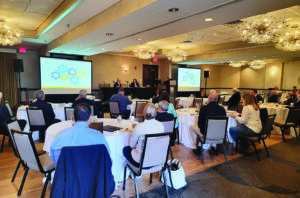
The New Hampshire Bar Association welcomed bar leaders from across the region to Portsmouth this fall as host of the 2025 New England Bar Association (NEBA) Annual Meeting. The gathering took place November 7–8 at the Sheraton Portsmouth Harborside Hotel.
NEBA is made up solely of the six New England state bar associations.
“It exists just to promote the exchange of information and relationships among New England’s bar associations,” NEBA Immediate Past President Russell Hilliard explains.
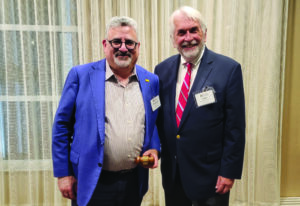
The annual meeting rotates among the six states on a six-year cycle. When it is a state’s turn to host, a lawyer from that state serves as NEBA president for that year. In 2025, that role fell to Hilliard – a longtime NEBA board member and past president of the NHBA (2003–2004) – who led the program planning for Portsmouth.
“This was an opportunity to focus the group a little bit on some of the issues that we’re dealing with here in this state, but also to show off beautiful Portsmouth, New Hampshire, as well,” says NHBA Vice President Robert Lucic, who assisted with planning in place of NHBA President Derek Lick, who was unable to attend.
NHBA Executive Director Sarah Blodgett says hosting the meeting is both a responsibility and an opportunity.
“Hosting the New England Bar Association’s Annual Meeting is always an honor, and this year in Portsmouth was no exception,” she says. “It gave New Hampshire a chance to welcome our colleagues from across the region, compare notes on the challenges we’re all facing, and share some of the strengths of our own bench and Bar. My hope is that the connections made here – and the ideas exchanged in those rooms and hallways – will translate into concrete support for our members and better service for the public in every New England state.”
For NHBA Immediate Past President Kathleen Mahan, that opportunity to compare notes is at the heart of the event.
“Any opportunity that we have to get together to hear and learn from one another is an opportunity that should be taken, and this annual meeting consistently is a great opportunity to do so,” she says. “The rules and challenges we face are relatively similar, and it’s good to hear what other states are doing – how they’re addressing their problems, how they’re trying to get ahead of other problems.”
A Full Friday Program
Formal programming on Friday began after a breakfast meeting with the NEBA Board. The first panel of the day focused on artificial intelligence, with Lucic moderating an interdisciplinary discussion on how AI is reshaping legal work.
“We had a very informed group that talked about a lot of the practical issues relating to AI as well as the bigger ethical issues,” says Lucic.
The AI program was followed by a panel on recent developments in IOLTA programs. Speakers discussed potential legal challenges to IOLTA, fluctuations in interest rates, and what those changes mean for funding civil legal services.
“There have been some potential challenges to the IOLTA program, and also the challenge relating to the fact that interest rates are coming down – how the program has evolved in terms of its ability to fund legal services, which I think is critical,” Lucic says. “That panel was of interest to all of the bar associations, especially given the other funding issues that are coming down the pike.”
Next, attendees heard an overview of the work of the Committee on Legal Education and Admission Reform (CLEAR), including discussion of the future of the bar exam, changes in legal education, legal deserts, and the challenges of preparing new lawyers for practice.
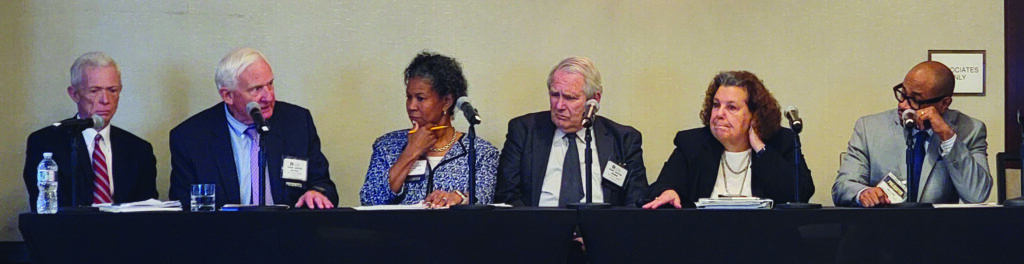
The morning culminated in a panel featuring all six New England state supreme court chief justices on one stage. Moderated by Rhode Island Superior Court Judge Linda Rekas Sloan, the chiefs addressed topics such as court security, budgets, access to justice, and the impact of technology on their courts.
“It was an unbelievable ask for all of those justices to drive to Portsmouth, and the fact that they were willing to do it was telling about the judges’ willingness to engage with their respective bar associations,” says Mahan.
New Hampshire Supreme Court Chief Justice Gordon MacDonald echoes that assessment and praises the Bar’s role in bringing the chiefs together.
“NHBA leadership and staff did a wonderful job hosting bar leaders from around New England,” he says. “The agenda was packed with informative panels, featuring a number of New Hampshire lawyers. I was particularly pleased that all five of my New England chief justice colleagues were able to join me for a lively discussion on the issues and challenges our state court systems are facing.”
In the afternoon, the focus shifted from courts and structures to the well-being of lawyers. A panel of representatives from the six New England lawyers assistance programs (LAP) described their services, best practices, and the ongoing work to reduce stigma and encourage lawyers to seek help.
“The LAP panel was a very in-depth program, going into the services that are available,” says Lucic, “and how they work, how effective they are, how important these programs have been, and how successful they have been in terms of changing the notion that lawyers who are dealing with issues have an outlet – some place that they can go which is confidential.”
The day’s formal programming closed with a presentation by Vermont bar counsel Mike Kennedy on ethics, wellness, and AI.
“Mike’s terrific – a wonderful, very inspiring speaker,” Lucic says. “He gave an overview and talked a lot about some of the ethical issues relating to AI and talked very poignantly about the issues relating to attorney wellness and the ability of the legal profession to reach out to people who are dealing with health issues.”
After an afternoon break that gave attendees time to enjoy Portsmouth, the group reconvened for dinner, board recognitions, and the ceremonial passing of the NEBA leadership gavel from Hilliard to incoming president Jonathan Dunitz of Maine.
National Perspectives on Saturday
Saturday’s program offered a national view of evolving dynamics in the legal world and bar leadership. ALPS Insurance Chief Operating Officer Chris Newbold addressed “Emerging Legal Trends and What They Mean for Bar Leaders,” drawing on malpractice claims data and risk management experience.
Lucic, who has heard Newbold speak several times, says he “talks about the trends of what are the issues facing lawyers, what types of claims are arising from the perspective of the malpractice carrier, and what are the issues that lawyers really need to be alert to and be on the lookout for.”
The meeting concluded with remarks from Laura Farber, a candidate for ABA president-elect, who shared her background with bar service and outlined her priorities if elected.
Strengthening Regional Ties
For many New Hampshire Bar leaders, the value of hosting NEBA lies as much in relationships as in programming.
Hilliard, who has attended NEBA meetings for more than two decades, points to past meetings that produced concrete benefits for New Hampshire members.
“When getting together with the other five states, you’re often learning that each of them is dealing with the same issues, or one of them has a great idea for how to handle an issue or new service and so forth,” he says. “At my first NEBA meeting in 2001, we had a presentation by a fellow in Ohio who had just developed Casemaker. We figured it was a no-brainer in terms of something we should provide to our members, and we signed on with Casemaker shortly after.”
For Mahan, the Portsmouth meeting also reaffirmed New Hampshire’s position in regional conversations about the profession.
“What I came away with is that New Hampshire remains at the forefront of tackling a lot of the issues that we face – that we have leadership in Sarah, our chief justice, our current president, and our president-elect who are not only dealing with the issues, but trying to identify and stay ahead of ones that may arise for legal practitioners,” she says. “We really are at the head of the boat for these.”